

Tanzania is Africa’s ultimate safari destination. With roughly a quarter of its area protected in a network of parks that includes the world-famous Serengeti, Tanzania is home to almost half the world’s remaining wild lions, and around one-fifth of Africa’s surviving elephants. Then there are the two million wildebeest and zebra that migrate annually through the Serengeti ecosystem, embarking on the dramatic mass calvings and chaotic river crossings that make it one of the world’s greatest wildlife spectacles.
The Serengeti alone would be sufficient to place Tanzania near the top of most travellers’ bucket lists. But Tanzania is home to several other world-class attractions. These include snow-capped Kilimanjaro (the world’s highest freestanding mountain), as well as the magical ‘spice island’ of Zanzibar, situated 25km offshore in the heart of the Indian Ocean, and parts of the three largest and most biodiverse lakes on the African continent.
Other prime wildlife sanctuaries include the Edenesque Ngorongoro Crater bordering the Serengeti, the vast sprawl of the Selous Game Reserve (a wildlife sanctuary larger than Switzerland), and the lovely Lake Manyara, set spectacularly at the base of the Great Rift Valley. Meanwhile, further west, on the remote shore of the world’s longest freshwater lake, Gombe Stream – the former stamping ground of Jane Goodall – and Mahale Mountains vie with each other as the top chimp tracking destinations in Africa.

It’s the only place where you can witness millions of migrating wildebeest over the Acacia plains, it’s the cradle of human life, and probably the closest to an untouched African wilderness you will ever get…welcome to Serengeti National Park. Where time seems to stand still, despite the thousands of animals constantly on the move.
The greatest wildlife destination on earth
The magic of Serengeti National Park is not easy to describe in words. Not only seeing but also hearing the buzz of millions of wildebeest so thick in the air that it vibrates through your entire body is something you will try to describe to friends and family, before realising it’s impossible. Vistas of honey-lit plains at sunset so beautiful, it’s worth the trip just to witness this. The genuine smiles of the Maasai people, giving you an immediate warming glow inside. Or just the feeling of constantly being amongst thousands of animals – it doesn’t matter what season of the migration you visit the Serengeti National Park, it’s magical all year round.
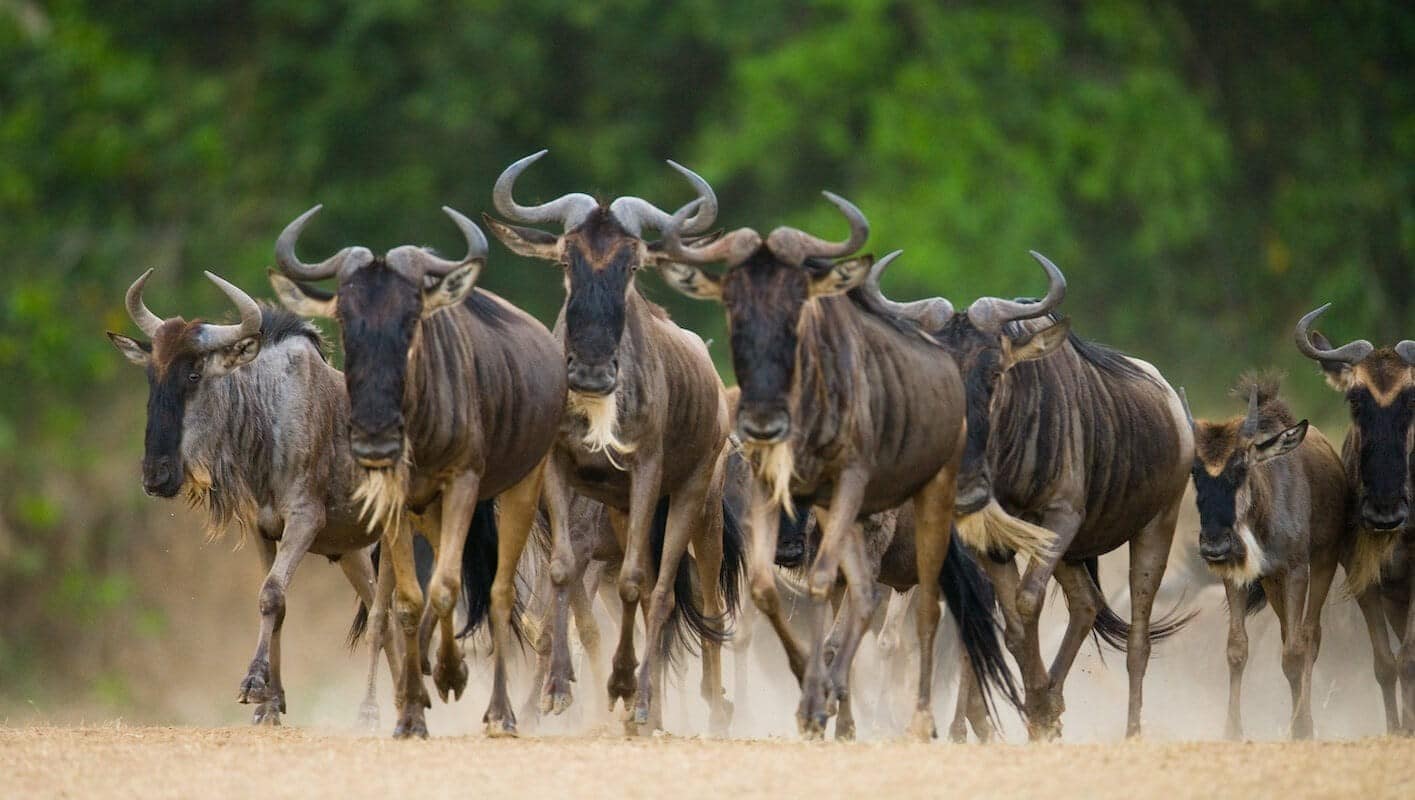
The never-ending circle of the Great Migration
Serengeti National Park was one of the first sites listed as a World Heritage Site when United Nations delegates met in Stockholm in 1981. Already by the late 1950s, this area had been recognised as a unique ecosystem, providing us with many insights into how the natural world functions and showing us, how dynamic ecosystems really are.
Today, most visitors come here with one aim alone: to witness millions of wildebeest, zebras, gazelles and elands on a mass trek to quench their thirst for water and eat fresh grass. During this great cyclical movement, these ungulates move around the ecosystem in a seasonal pattern, defined by rainfall and grass nutrients. These large herds of animals on the move can’t be witnessed anywhere else. Whereas other famous wildlife parks are fenced, the Serengeti is protected, but unfenced. Giving animals enough space to make their return journey, one that they’ve been doing for millions of years.
Beyond the Great Migration
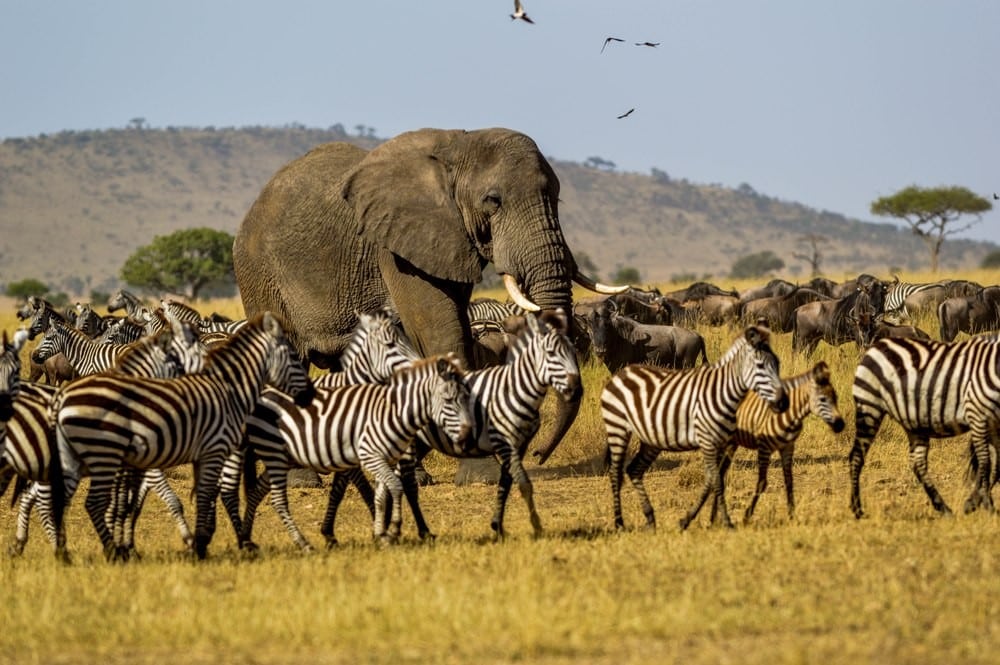
Even though, for many travellers, the migration is one of the main reasons to visit Serengeti National Park, it’s worth looking beyond this immense spectacle. First of all, nature can’t be directed. Having realistic expectations of your chances to witness a river crossing, or a large herd on the move, is crucial. A river crossing for example often only lasts thirty minutes, so can be missed in the blink of an eye. But don’t let this discourage you: there are plenty of other reasons to visit the Serengeti. If it’s not for this vast stretch of land where you can drive forever and never get enough, it might be for the incredible skies of dazzling colours, or the primal feeling of excitement when a deep dark-grey thunderstorm appears on the broad horizon. Or you might answer the lion’s call, and come to the Serengeti for one of the largest concentrations of predators in the world: the herds support about 7,500 hyenas, 3,000 lions and 250 cheetahs. And how about the silent grey giants? Elephants in the Serengeti amble over the plains into the woodlands, feasting on leaves and tree branches.
Tribes in the cradle of human life
Even though animals still rule the plains of the Serengeti, this area has an incredibly long history of human occupation. Not only humans, but also human ancestors (Australopithecus afarensi) lived in this area for almost 4 million years. Today, Serengeti National Park is still home to several indigenous tribes. One of the most famous tribes is the Maasai: this tribe is unique and popular due to their long-preserved culture. Despite education, civilization and western cultural influences, the Maasai people have clung to their traditional way of life, making them a symbol of Tanzanian and Kenyan culture.
Vibrancy, variety and vastness
You will soon realise that amazement doesn’t have boundaries in this world-renowned National Park of Tanzania. Serengeti is a transition area, with distinct changeovers going from rich flat soils to poor hilly soils in the north, attracting a wide variety of vegetation and animals. Whether you are looking for big cats, birds or even smaller creatures: Serengeti National Park delivers. Even to understand and experience just a small part of this ecosystem, will change your vision on our world and the environment.
After being overwhelmed by the vibrancy, variety and vastness of this land, this place of transition will leave you changed forever.
History of Serengeti National Park
In the late 1800’s and early 1900’s, explorers and missionaries described the Serengeti plains and the massive numbers of animals found there. Only minor details are all that were reported before explorations in the late 1920s and early 1930s supply the first references to the great wildebeest migrations, and the first photographs of the region.
An area of 2,286 square kilometres was established in 1930 as a game reserve in what is now southern and eastern Serengeti. They allowed sport hunting activities until 1937, after which it stopped all hunting activities. In 1940 Protected Area Status was conferred to the area and the National Park itself was established in 1951, then covering southern Serengeti and the Ngorongoro highlands. They based the park headquarters on the rim of Ngorongoro crater.
So, the original Serengeti National Park, as it was gazetted in 1951, also included what now is the Ngorongoro Conservation Area (NCA). In 1959, the Ngorongoro Conservation Area was split off from the Serengeti National Park and they extended the boundaries of the park to the Kenya border. The key reason for splitting off the Ngorongoro area was that local Maasai residents realized that they were threatened with eviction and consequently not allow to graze their cattle within the national park boundaries. To counter this from happening, protests were staged. A compromise was reached wherein the Ngorongoro Crater Area was split off from the national park: the Maasai may live and graze their cattle in the Ngorongoro Crater area but not within Serengeti National Park boundaries.
In 1961 the Masai Mara National Reserve in Kenya was established and in 1965 the Lamai Wedge between the Mara River and Kenya border was added to Serengeti National Park, thus creating a permanent corridor allowing the wildebeests to migrate from the Serengeti plains in the south to the Loita Plains in the north. The Maswa Game Reserve was established in 1962 and a small area north of The Grumeti River in the western corridor was added in 1967.
The Serengeti National Park was among the first places to be proposed as a World Heritage Site by UNESCO at 1972 Stockholm conference. It was formally established in 1981.

Olduvai Gorge (also referred to as Oldupai Gorge) is a fascinating paleoanthropological site in Tanzania and it’s one of the most important of its kind in the world. This red dusty ochre of the Gorge stretches to about 48km long and 90 meters deep and is located in the Great Rift Valley in Northern Tanzania. It is situated between the Eastern Serengeti plains and the Ngorongoro Conservation Area at a distance of about 150km from the town of Arusha.
This National Historic site of Tanzania was recognized as a UNESCO’s World Heritage site in 1979 due to the fact that it preserves the oldest history of mankind evolution and this has attracted the attention of many scientists for more than half a century. It is in this place that Human evolution happened from Australopithecus to Homo hence the nickname the cradle of mankind.
The Olduvai Gorge was formed roughly about 30,000 years ago by erosion of an incised valley draining water from the Ndutu Lake into the Olbalbal depression at the foot of Ngorongoro cutting through several layers of the soil forming 4 independent beds. The name Oldupai Gorge comes from a Maasai word Oldupai which means the place of wild sisal, a species of flower plants that were largely spread in this area.
This Gorge was made famous in 1935 by the paleoanthropologists Louis and Mary Leakey when they discovered the fossils of ancient hominines and the hominins including the famous Zinjanthropus skull and the Homo habilis who are assumed to be the makers of the early stone tools that were found in this area after about 30 years of excavation. However, it was first stumbled upon by a German entomologist professor Kattwinkel in 1911.
Despite Olduvai Gorge being the most famous paleoanthropological site in Tanzania, other excavation sites in this country include the Laetoli Hills which are located 45km south of the Olduvai Gorge and are renowned for the discovery of the Hominina footprints, which are preserved as Volcanic ash.
The Olduvai Gorge can be visited at any time of the year, however it’s advised that one hires an official guide when visiting these excavations for a better insight into the destination. Since it’s located between Ngorongoro Conservation Area and Serengeti National Park, it’s a good stop for a visit to both these protected areas for a much fulfilling safari experience.

The breathtaking Ngorongoro Crater is a natural wonder of unparalleled beauty and ecological significance. As the world’s largest inactive and unfilled volcanic caldera, this UNESCO World Heritage Site is home to an extraordinary diversity of wildlife, including Africa’s iconic Big Five – lion, elephant, buffalo, leopard, and rhinoceros – alongside herds of wildebeest, zebras, and a host of other species.
Formed millions of years ago by a volcanic eruption, the Crater today shelters over 30,000 animals within its verdant plains, lakes, and forests. This unique ecosystem is a microcosm of Africa’s wilderness, making Ngorongoro one of the continent’s most coveted safari destinations.
The name “Ngorongoro” comes from the Maasai people, the original stewards of this land, and is thought to mean “The Gift of Life.” This name aptly reflects the Crater’s life-sustaining presence in the landscape. With its stunning vistas and rich history, the Ngorongoro Crater stands as one of the Seven Natural Wonders of Africa.
The Ngorongoro Crater is more than just a geological marvel; it is a thriving habitat, hosting an incredible concentration of wildlife. It’s natural to use superlatives when discussing popular travel destinations. Still, in the case of the Ngorongoro Crater, we’re truly talking about one of Earth’s greatest areas for wildlife!
Covering approximately 100 square miles, the Crater’s floor is a mosaic of grasslands, swamps, and acacia woodlands, providing perfect habitats for an array of fantastic species. The Big Five – lion, elephant, buffalo, leopard, and rhinoceros – are commonly spotted here, making it one of the best places in Africa to see these iconic animals in their natural environment. (Note: Leopards are the hardest to spot of the Big Five. They are not found on the crater floor but in the highlands around the crater rim. This means, unfortunately, they’re not commonly spotted on game drives. That being said, it’s all the more magical if you do catch a glimpse of them!)
Beyond the Big Five, the Crater supports large populations of wildebeest, zebras, and gazelles, which attract predators like cheetahs and hyenas. Birdlife is equally impressive, with over 500 species recorded, including flamingos that flock to the Crater’s central soda lake, Lake Magadi. This concentration of wildlife within a relatively confined area offers visitors unparalleled opportunities for game viewing.

While the Crater is the crown jewel, the entire Ngorongoro Conservation Area (NCA) offers a dizzying mosaic of contrasting landscapes and experiences. Spanning nearly 3,200 square miles, the NCA encompasses highland plains, savannas, and forests, all interspersed with Maasai pastoral lands. This unique coexistence of humans and wildlife is central to the area’s designation as a UNESCO World Heritage Site.
One of the most significant sites within the NCA is the Olduvai Gorge, often called the “Cradle of Mankind.” Here, some of the earliest evidence of human evolution has been uncovered, making it a must-visit for those interested in archaeology, anthropology, and the captivating early story of humankind.
In addition to Olduvai, the NCA is home to lesser known but equally stunning features like the Empakaai and Olmoti Craters, which offer exceptional hiking opportunities away from the crowds.
The Ngorongoro Conservation Area is not only known for its geological wonders but also plays a vital role in the annual wildebeest migration. From late December through March, large herds move into the Ndutu region, which is located at the southern edge of the NCA and directly borders the Serengeti. This time of year is particularly remarkable as it coincides with calving season in February. During this time, thousands of wildebeest give birth, transforming the plains into a vibrant nursery for young animals. The migration and calving season in Ndutu offer a unique spectacle of life and survival.
The Maasai have resided in the Ngorongoro Conservation Area for centuries, living in harmony with the wildlife in a symbiotic relationship. Their traditional way of life revolves around cattle herding, which they consider as their primary source of livelihood and status. The Maasai people adhere to ancient customs, wearing distinct red clothing and participating in ceremonial dances.
Tourists can experience Maasai culture firsthand by visiting a local village, where you can learn about their way of life, beliefs, and traditional crafts. The Maasai play a crucial role in conservation efforts, preserving the environment and cultural heritage.
Option 1: AM end of The Great Migration Safari in Masai Mara…meet your guide and continue via road to Kirawira Camp, Serengeti
Check-out after breakfast and travel with your guide in the lodge vehicle to the Kenya/Tanzania border at Isebania, a distance of 95kms. Switch vehicles and continue your drive, entering the Serengeti National Park and proceeding to your tented camp, located in the Western Serengeti. The total expected distance for today is approximately 285kms.
Arriving at your camp, check-in and enjoy lunch and a siesta prior to this afternoon’s game drive.
Option 2: AM flight Nairobi to Kilimanjaro… meet your guide and continue via road to Kirawira Camp, Serengeti
Check-out after an early breakfast and transfer to Nairobi Airport for your flight to Kilimanjaro. Departing flight: Precision Air PW718 departing Nairobi at 08:35 and arriving Kilimanjaro at 09:35. Meet your guide and travel via road to your tented camp, located in the Western Serengeti.
Afternoon – Game viewing drive
After some relaxation, meet your guide for an afternoon game viewing drive in the Serengeti National Park.
Evening – Dinner at your Camp
After a lengthy day in your safari vehicle, enjoy dinner at the camp.
Overnight: Kirawira Serena Camp, Serengeti National Park

Morning – Game viewing drive
Enjoy your first early morning game viewing drive in the Serengeti national Park before returning to camp for breakfast. The remainder of the morning is at your leisure prior to this afternoon’s activity.
Lunch at Kirawira Serena Camp.
West Serengeti plays a pivotal role in sustaining the Great Migration of wildebeest and the ensuing antelopes and zebras that traverse through its rivers and woodlands. This less-travelled corner of the Serengeti offers thrilling game drives with opportunities to view large populations of predators, especially lions. From the thundering of hooves and the haunting calls of the lions at dusk to the friendly smiles of the Ikoma tribes, Western Serengeti is a journey that will awaken your spirit to the beauty of nature.
Size
±1,300 square miles (±3,367 km²)
Landscape
Rolling hills, open woodlands, grassy plains, floodplains, riverine areas, and valleys.
Main Species
Nile crocodile, hippopotamus, elephant, giraffe, wildebeest, eland, impala, topi, buffalo, lion, cheetah, hyena, and leopard.
Afternoon – Game viewing drive
Head out again at approximately 3:00pm on a game viewing drive…watch the sunset over the savannah before returning to camp.
Evening – Dinner at the camp
Returning to the camp at dusk, time to freshen-up prior to dinner in the main restaurant.
Overnight: Kirawira Serena Camp, Serengeti National Park

Morning – Continue to Central Serengeti
Enjoy an early morning game viewing drive before returning to your camp for breakfast.
Check-out after breakfast and meet your guide for your drive due east to the Central Serengeti and your lodge…the Serengeti Serena Safari Lodge.
Enjoy a game viewing drive as you cross the Serengeti plains arriving in time for lunch.
The Central Serengeti, lying at the heart of this spectacular national park, is the most popular region in the reserve for its abundant wildlife, large numbers of big cats and quintessential Serengeti landscapes of acacia-studded savanna. Resident wildlife makes this part of the Serengeti a fantastic year-round destination.
The Seronera River Valley, located in the south-central region of the park, is one of the most popular areas in the entire reserve. Known as the Big Cat Capital of Africa, the Seronera is rich in lion, leopard and cheetah – and people often spot all three in one day of game drives. Look for leopards around the Seronera River, which is home to one of Africa’s densest populations of big cats, while lions can often be seen on the kopjes (rocky outcrops).
The Serengeti Plains – the open savanna south of the Seronera River – are prime cheetah territory. Other animals to spot in the area’s varied habitats of rivers, swamps, kopjes and grasslands include elephants, hippos and crocodiles in the rivers, buffaloes, impala, topi, jackals and bat-eared foxes.
Afternoon – Game viewing drive
After lunch and some siesta time, meet your guide and head out once again on a late afternoon game viewing drive in the Central Serengeti…experience a magnificent sunset before returning to your lodge.
Evening – Dinner at the lodge
Enjoy dinner at the lodge.
Overnight: Serengeti Serena Safari Lodge, Serengeti National Park

Full Day – Game viewing drive…
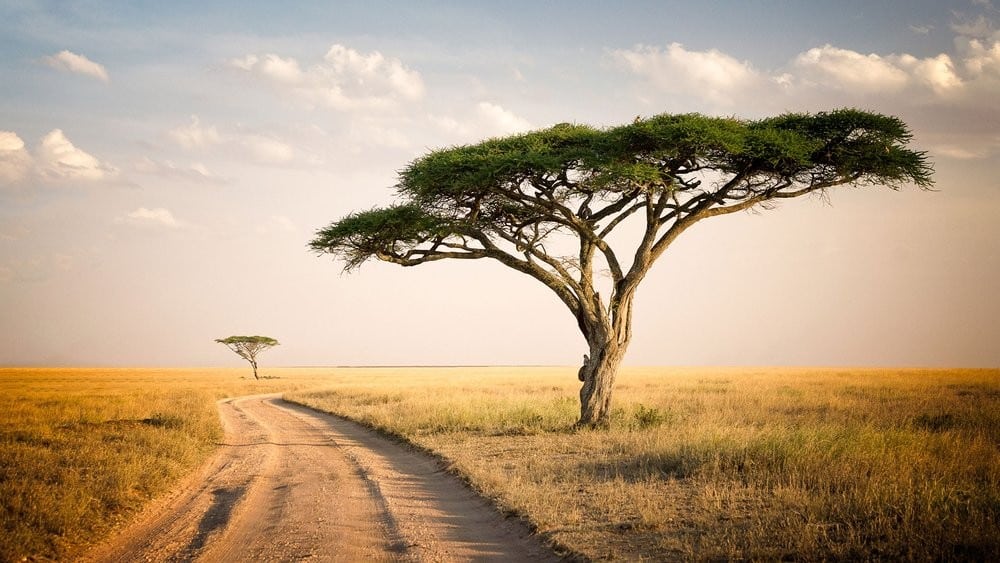
Today is an adventure…a full day game viewing drive in the Serengeti National Park. Enjoy a picnic lunch under an acacia tree along with beverages and the wild!
Evening – Dinner at the lodge
Enjoy dinner at the lodge.
Overnight: Serengeti Serena Safari Lodge, Serengeti National Park
Morning – Continue to Ngorongoro Conservation Area…visit Olduvai Gorge
Check-out after breakfast this morning and continue via road towards the Ngorongoro Conservation Area. A stop will be made at Olduvai Gorge, where the oldest human remains were discovered by Richard and Mary Leakey.
Experience a private tour of the gorge, history and museum.
Halfway along the dusty road between the Ngorongoro Crater and the Serengeti, in northern Tanzania, Olduvai Gorge cuts a ragged scar through the plains — and it is, quite simply, the most important archaeological site on Earth. This is where the Leakey family unearthed the fossils that proved humanity was born in Africa, where layer upon layer of rock reads like the opening chapters of our shared story. Most travellers arrive as a brief stop on safari and leave strangely moved: from the viewpoint you are looking at the very landscape where our earliest ancestors lived, made tools and died almost two million years ago.
We have taken hundreds of guests to the gorge over the years, and the reaction is remarkably consistent. People expect a quick leg-stretch between parks; what they get is goosebumps. There is something about standing at the rim, with the wind coming off the plains and the layered cliffs falling away below, that makes the abstract idea of human origins suddenly, physically real.
This visit covers what the gorge actually is, the discoveries that made it famous, the remarkable Laetoli footprints
Continue to your lodge, located on the rim of the Ngorongoro Crater. Upon arrival, enjoy lunch.
Afternoon – Game viewing drive
After lunch and some siesta time, meet your guide and head out once again on a late afternoon game viewing drive in the Ngorongoro Crater…the steep descent into the crater is all a part of the adventure.
Evening – Dinner at the lodge
Enjoy dinner at the lodge.
Overnight: Ngorongoro Serena Lodge, Ngorongoro Crater
Enjoy an early Buffet Breakfast this morning.
Full Day – Game viewing drive…
Today is an adventure…a full day game viewing drive in the Ngorongoro Crater. Descending into the crater, experience a diverse ecosystem and plethora of wildlife. Enjoy a picnic lunch under an acacia tree along with beverages and the wild!
Like the Grand Canyon, nothing can quite prepare you for the moment you first stare into the Ngorongoro Crater…the variety of flora and fauna is so impressive here that rewarding sightings can be had almost anywhere: from the flamingo-fringed waters of Magadi soda lake to the leopard-frequented yellow fever trees of Lerai Forest. The only surprising absentees from the crater floor are giraffe and impala, but that is more than compensated for by good populations of eastern black rhino and large elephant herds.

Evening – Dinner at the lodge
Enjoy dinner at the lodge.
Overnight: Ngorongoro Serena Lodge, Ngorongoro Crater
Enjoy buffet breakfast at your lodge.
Morning – travel to Kilimanjaro Airport…departure
Check-out after breakfast this morning and travel via road to Kilimanjaro Airport…distance of 172kms and approx. 3hrs.


Escape to the Africa of legend and myth, where endless plains surround our luxury tented safari camp in the Serengeti. Styled to evoke the elegant hunting camps of historic explorers such as Denys Finch Hatton and Baron Bror von Blixen, Kirawira Serena Camp welcomes you to a destination where unforgettable safari adventures are complemented by attentive service and refined five-star amenities. As the most exclusive of the Serena safari properties, the camp offers an experience beyond compare, set against the majesty of Serengeti National Park’s Western Corridor.
The camp features 25 beautifully appointed luxury tents with sweeping views of the plains. Elegant dining tents are furnished in Edwardian style, while staff are attired in classical safari-inspired uniforms. A central lounge tent is evocatively furnished with chintz-covered chaise lounges, Persian rugs, antique-style writing desks and travel-inspired décor.
Guests enjoy abundant opportunities for discovery, including game drives in search of the Serengeti’s “Big Five.” Witness the “Greatest Wildlife Show on Earth,” the annual migration of over one million wildebeest or observe crocodiles in the

Evoking the elegant safari camps of the early 20th century, our 25 beautifully appointed tents are raised on timber platforms and arranged to maximize privacy. Step onto your furnished deck and into a bedroom steeped in Edwardian charm, with steamer trunks, writing desks, brass lamps, rugs, sepia photographs and four-poster beds with patchwork quilts. Exquisite bathrooms feature carved mahogany furniture and classic black-and-white tiled floors, along with a separate flushing WC, a shower, twin marble basins and hot and cold running water.
Watch the sunrise with a cup of fine coffee or tea on your private balcony. Indulge in choice cuts of meat in our dining tent, enjoy a full English breakfast or savour sundowner cocktails in the bush. End the evening with drinks by the firepit.
Our elegant twin dining tents are appointed with Edwardian-inspired furnishings, sprung floors, crisp-starched napery, delicate blue and white China and polished silverware. Meals are served by attentive staff dressed in traditional safari-inspired attire.
We offer full English breakfasts, along with five-course lunch and dinner menus featuring delicate soups, roasts, classic salads, homemade sorbets, local cheese boards and freshly brewed Arabica coffee, while our wine selection features carefully curated European and South African labels.

An award-winning gem of a lodge in one of the most beautiful settings in Tanzania. Seamlessly blended high into an acacia-lined ridge, our African-style lodge and infinity pool offer panoramic views across the Serengeti’s vast, endless grasslands, where lions and cheetahs stalk their prey and massive migrating wildebeest herds darken the landscape.
Here, you will savour the ancient stillness and serenity of one of the most magnificent destinations on earth. Discover the warmth and cosiness of stone-built, traditionally thatched “rondavel” lodging. Dine under an indigo blanket of stars and enjoy unforgettable adventures and experiences ranging from private safaris and day trips to the prehistoric Ngorongoro Crater to Swahili lessons, guided nature walks and massage treatments.
Take pleasure in a Serengeti safari destination where time seemingly stands still and your room remains at the threshold of undisturbed, untamed Africa.

Set high on a hill with the rolling plains below forming a natural amphitheatre, your room offers a ringside seat to the greatest show on earth: the annual migration of the wildebeest. Our 65 guest rooms are housed in clusters of traditional domed “rondavels” arranged around the lodge’s stunning infinity pool. Sweeping views, traditional stone-built and thatched architecture and private balconies immerse you in the stunning beauty and solitude of Serengeti National Park like few other accommodations can.
Decorated in warm earth tones, punctuated by pops of brightly coloured fabrics and ornate Makonde carvings on the walls, all rooms feature private entrances, handcrafted wooden furniture, spacious bedrooms and natural stone bathrooms. Amenities such as complimentary Wi-Fi and 24-hour room service, along with personalized touches like standing/table fans and comfortable robes, enhance the guest experience.
Greet the morning with a cup of fine Tanzanian coffee or tea on your private balcony. Indulge in the choicest cuts of meat in our dining room or an English breakfast or sundowner cocktails in the bush. Top off an evening with a cocktail on the terrace overlooking the infinity pool. Breakfast and lunch are presented in buffet style and feature a wide range of international choices. Our lunch menus typically include meat, poultry, fish and vegetarian options. Our table d’hôte dinner menus feature a salad buffet, soup, entrée, pudding, cheese and biscuits as well as tea or coffee.

Tanzania’s prehistoric Ngorongoro Crater, a UNESCO World Heritage Site, has loomed above the landscape for millennia. Deep within its immense walls lies a breathtaking blue-green ecosystem dotted with plains, lakes and forests—an otherworldly “land that time forgot,” rich with massive bull elephants, rhinos, wildebeest and the highest concentration of lions in Africa.
Perched high above the plains on the Crater’s jagged rim and cloaked in river stone and indigenous vines, Ngorongoro Serena Safari Lodge is barely visible to the naked eye. Framed by arched stone passages and timbered decks, its torch-lit walls are adorned with stylized cave paintings.
At the heart of the lodge burns a glowing fire, kept constantly alight. Rooms are arranged around the Crater rim, each with a rock-enclosed balcony and uninterrupted views of the volcanic amphitheatre below.

The 74 guest rooms blend the indescribable beauty and magnitude of the Ngorongoro Crater with unparalleled standards of comfort and service. Clinging to the Crater rim beneath river stone and a cloak of native vines, our accommodation is so seamlessly entwined with the landscape that guests can’t help but feel at one with their natural surroundings. With private stone balconies opening onto the blue-green vastness of the Crater floor below, it feels as though you are living alone in the “Cradle of Humankind.”
The Main Restaurant at Ngorongoro Serena Safari Lodge is beautifully designed in the traditional style and décor of Tanzania to create an enchanting dining experience. Savour a delightful range of local and international cuisines crafted from the finest and freshest meats, produce, and ingredients.
Featuring charming stone-built architecture, a glowing fireplace and walls adorned with prehistoric cave paintings and flickering torchlight, the elegant yet relaxed dining space is ideal for any occasion. Floor-to-ceiling windows and double doors opening onto an expansive terrace complement each meal with panoramic views of the Ngorongoro Crater.
Breakfast and lunch are served buffet-style and feature a wide range of international choices. In typical safari style, we offer a full English breakfast as well as European options, while lunch includes meat, poultry, fish and vegetarian dishes. Our table d’hôte dinner menu features a salad buffet, soup, entrée, dessert, cheese and biscuits, and tea or coffee. Vegetarian options are always available. The majority of our meat and dairy products, as well as fruits and vegetables, are sourced from local communities.