

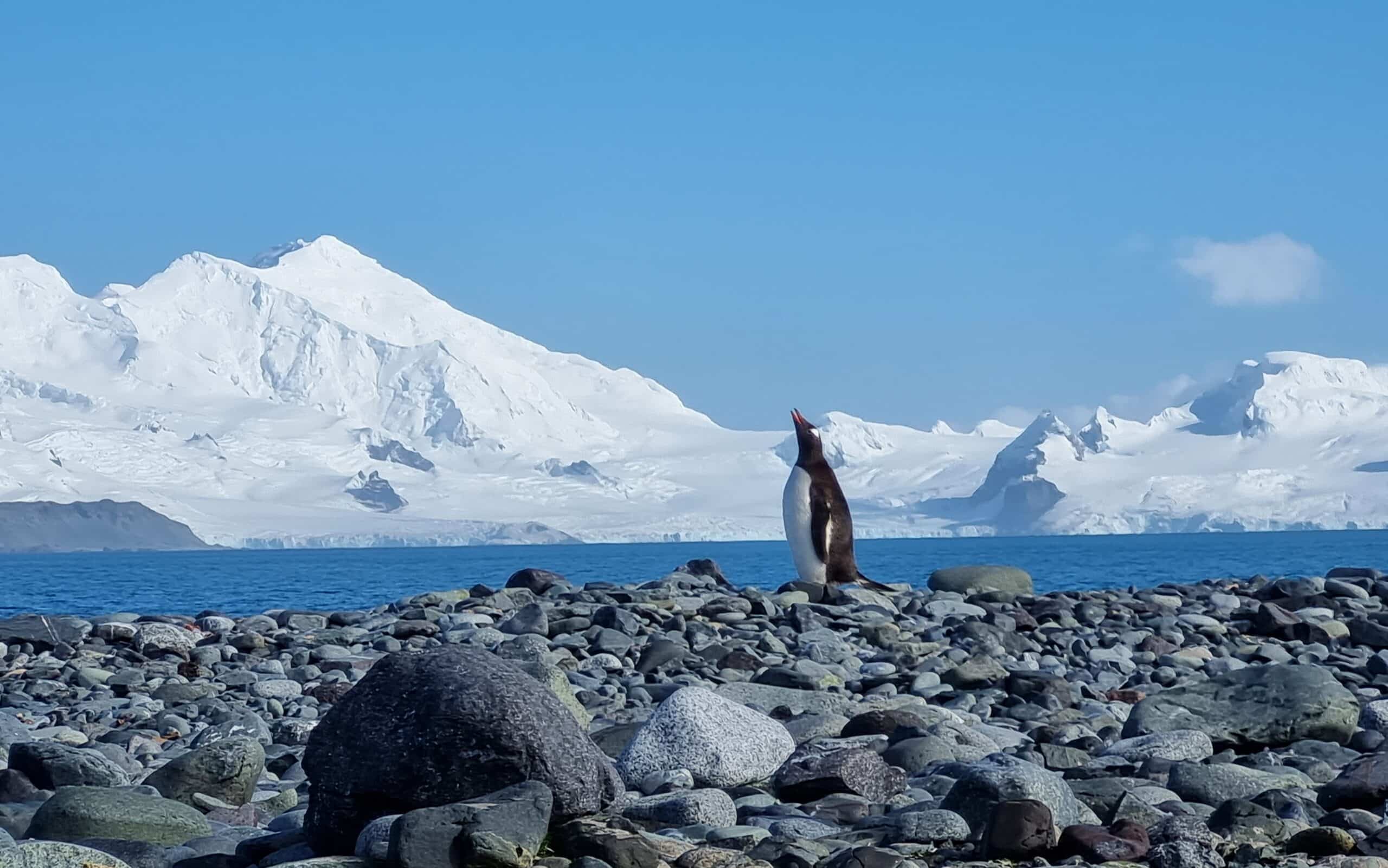
Welcome to Antarctica!
No place on earth compares to this vast wilderness of elemental forces: snow, ice, water, rock. Antarctica is simply stunning.
Adventure…Antarctica’s surreal remoteness, extreme cold, enormous ice shelves and mountain ranges, and myriad exotic life forms invariably challenge you to embrace life fully. Everyone – scientist, support worker, government official and tourist – who comes to this isolated continent, must ‘earn’ it, whether by sea voyage or flight. Ice and weather, not clocks and calendars, determine the itinerary and timetable of all travel here. Today, it’s possible for visitors to climb Antarctic peaks or kayak icy waters. But there is nothing quite like the craggy crevasses of a magnificent glacier or the sheer expanse of the polar ice cap.
Wildlife…Preserved by the Antarctic Treaty, Antarctica is home to some of the world’s most extraordinary species. Some, such as the enormous whales, migrate from afar, while others, including the Weddell seal and emperor penguin, remain close to the continent. Millions of seabirds skim the Southern Ocean, the world’s most abundant, and species such as albatrosses and petrels circle the waters. Wildlife is generally unafraid of humans: visitors usually elicit no more than an uninterested yawn from seals and penguins focused on their young.
 History…The names of explorers and their sovereigns and benefactors are written on Antarctica’s shores. Renowned explorers from Cook to Amundsen and Scott all tried to penetrate this vast, mysterious land: each with varying degrees of success. Visitors can follow in their footsteps and imagine what it was like to forge through the pack ice on a creaking wooden boat or to haul sledges across the polar plateau. Some of the historic huts actually remain, preserved frozen in rime ice, to tell the story of adventures long past.
Inspiration…Antarctica possesses an unnameable quality. Call it inspiration, call it grandeur…it is simply the indescribable feeling of being a small speck in a vast, harshly beautiful land. A land where striated ice towers float among geometric pancake ice, literally untouched mountains rear from marine mist, and wildlife lives, year in and year out, to its own rhythms, quite apart from human concerns. To let our minds soar in a place nearly free of humankind’s imprint: this is magic.
Antarctica – The Explorer’s Route
16-day all-inclusive Antarctica Expedition Cruise including round-trip flights from Buenos Aires.

Spend nine days exploring Antarctica, visiting the South Shetland Islands, Antarctic Sound, Weddell Sea, Gerlache Strait and Penola Strait, beginning and ending in Buenos Aires.
Travel beyond the ordinary routes and visit exclusive and secluded areas. Experience every facet of Antarctica and have enough time to savour every unforgettable moment.
Learn all about the splendours of the Antarctic Peninsula, with more exploration than any other Antarctic Peninsula voyage.
This voyage is for those who want the ultimate in Antarctica experiences. With nine full days in the White Continent, we venture further to visit iconic regions where the Antarctic explorers first set sail. You’ll witness a wildlife extravaganza as we encounter whales, seals, colonies of penguins, and many seabirds – all living wild and free in this pristine haven. On this active expedition, we’ll head out in kayaks or use snowshoes so you can really get to know Antarctica up close and personal. And with flexibility built into our itinerary, we can adapt our route to chase the extraordinary.
Our adventure begins in the birthplace of the tango, Argentina’s Buenos Aires, before we fly to Ushuaia and join our comfortable hybrid-powered expedition ship. Crossing the Drake Passage is a time of anticipation, excitement and learning with the Expedition Team, as we sail towards the Antarctic Peninsula. Upon arrival, we’ll explore the South Shetland Islands, the Weddell Sea, Antarctic Sound and the Gerlache and Penola straits. Days will be filled with wonder and awe as we gaze upon immense glaciers and icebergs and enjoy a rich and fulfilling adventure like no other.

MS Roald Amundsen is as pioneering as the man it is named after, Roald Amundsen – the legendary Norwegian explorer. One of two fully hybrid ships in the HX fleet, explore the wonders of the world onboard one of the most environmentally friendly cruise ships in the world.
About the ship
Named after the first man to cross Antarctica and to reach the South Pole, MS Roald Amundsen leads the way towards an even more sustainable way of travelling. The ship is specially constructed for voyages in polar waters. It serves as a comfortable base camp at sea – bringing adventurers from all over the world to the most spectacular destinations in the most sustainable way.
Ship features
MS Roald Amundsen is the first of two hybrid ships HX Expeditions will add to its fleet over the next few years. Emissions are cut by sailing with electrical propulsion. Innovative sustainable technology reduces the ship’s fuel consumption and CO2 emissions by 20 percent.
The stunning scenery is reflected in a rich and comfortable interior design. Scandinavian materials from nature, such as granite, oak, birch and wool are used to create relaxed and stylish cabins and public areas. All cabins are outside cabins, of which 50% have private balconies, and aft suites feature private outdoor hot tubs with spectacular views.
One of the most eye-catching exterior design features is the two-level indoor/outdoor Observation Deck. It is an ideal place to scan the scenery and watch for wildlife with your binoculars.
Welcome aboard
An HX trip includes everything from daily excursions and activities to our onboard Science Centre, meals, gratuities, drinks* and more. All designed to give you the expedition experience of a lifetime.
A stylish sanctuary
Your expedition ship is your home away from home; casual, comfortable and complete with everything you need for your adventure. Top to bottom, bow to stern, your ship is fitted out with quality materials inspired by simple Scandinavian chic.
Interior and Cabins
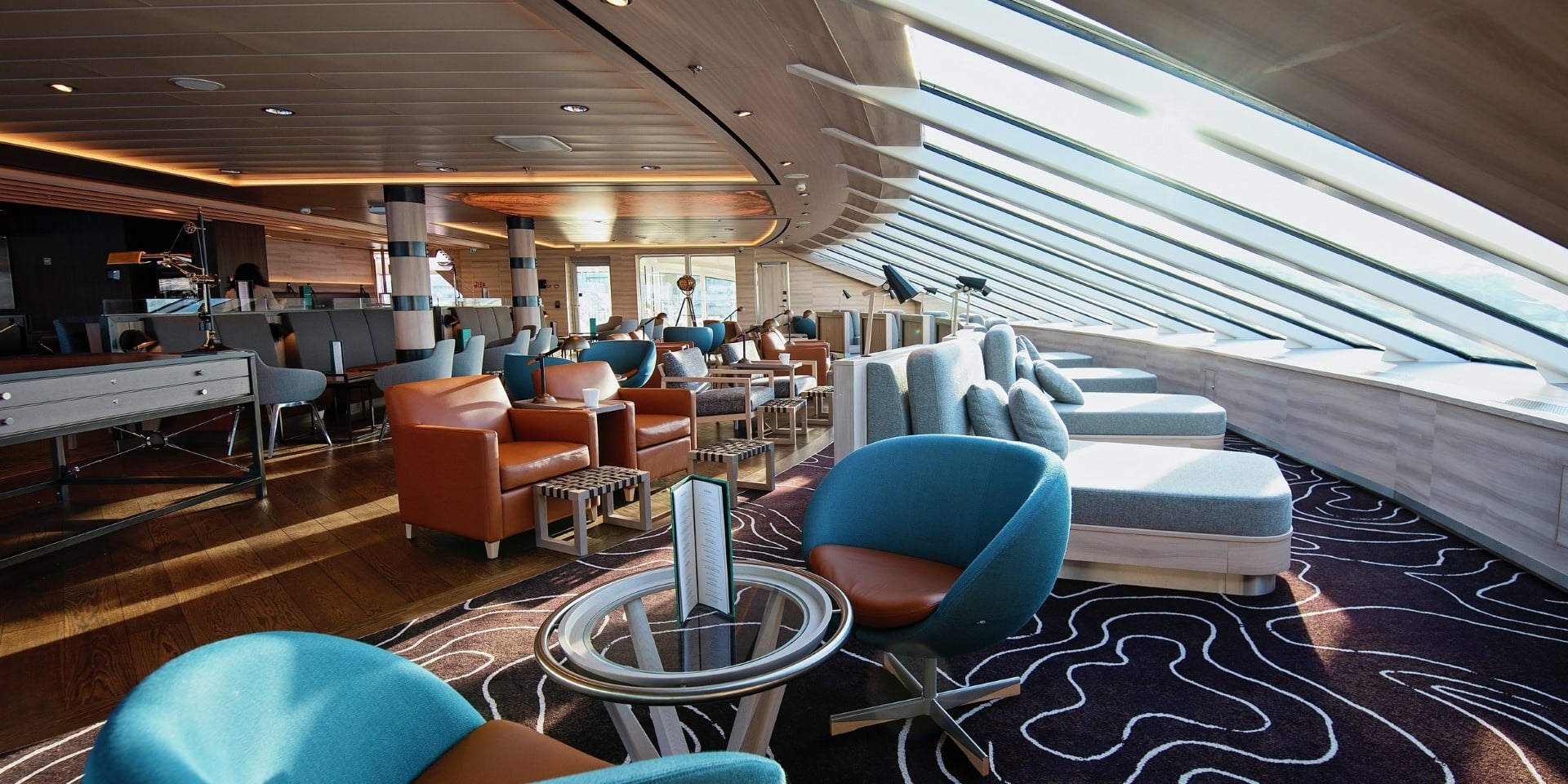
The stunning scenery is reflected in a rich and comfortable interior design. Scandinavian materials from nature, such as granite, oak, birch and wool used to create relaxed and stylish cabins and public areas. All cabins are outside, 50 % will have private balconies.

Expedition Suites
The best accommodation on our expedition ships. Spacious, private, and with wide windows to watch the world drift by, suites are comfortable and calm havens at sea. Selected suites also offer a private balcony which may have an outdoor hot tub for added luxury.
Expedition Suite
Spacious, serviced, and with bed combinations for up to four people, these well-appointed apartments offer special features such as private balconies, expansive windows, and hot tubs. Suites feature a double bed that can be divided into two single beds, and some have a sofa bed. All have a private bathroom with a shower and toiletries, a TV, a safe, European two-pin plug sockets, a single-serve coffee machine, and tea and coffee-making facilities. Naturally, the accommodation includes a full range of premium facilities as well as a minibar (charges apply), daily turn-down service, and laundry. Complimentary fine dining in our Lindstrøm restaurant is part of the experience, and a takeaway service means you can enjoy all meals exclusively. Champagne on ice and a platter of delicacies are provided for your enjoyment as you set sail.
ME | Suite with balcony

Polar Outside
The Polar Outside cabins on MS Roald Amundsen have a double bed that can be divided into two single beds, and some have a sofa bed. All have a private bathroom with a shower and toiletries, a TV, a safe, a minibar (charges apply), European two-pin plug sockets, and tea- and coffee-making facilities.
RR | Outside cabin
Explorer lounge & bar
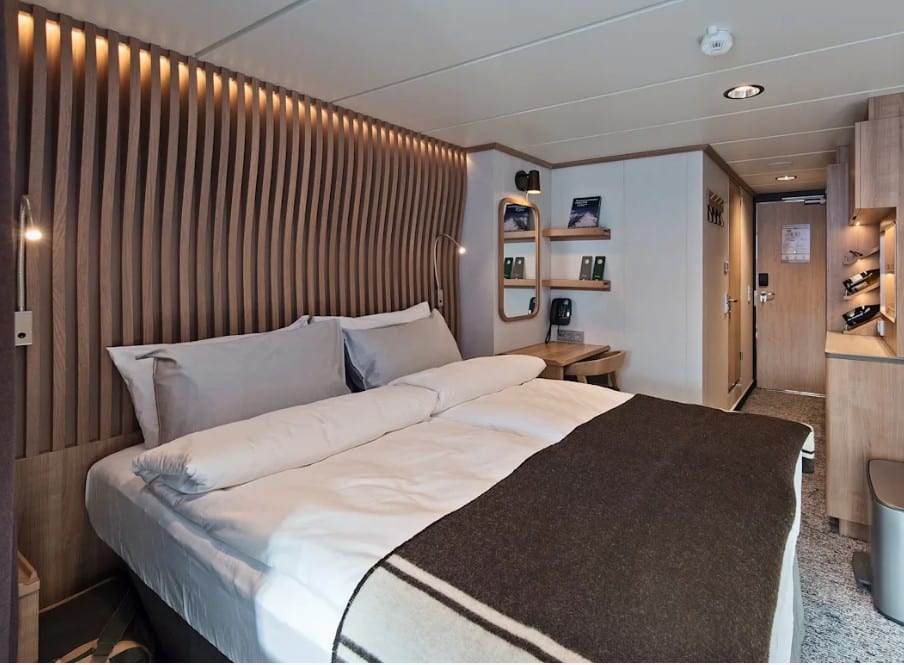
Relax and rejuvenate in the elegant Explorer lounge & bar. Sink into a comfortable armchair and gaze out at the magnificent views through the floor-to-ceiling windows.
Science Centre
This is the core of the onboard experience. The Science Center is packed with state-of-the-art technology and high-tech gadgets such as touch screens and science equipment. This is where guests and staff/crew meet, mingle, and create a deeper understanding of the areas you explore. The flexible venue features lecture spaces, a small library, and specialty areas for workshops in photography, biology, and more. This is also where you’ll find HX’s hand-picked Expedition Team.
Loving local food
Prepare your tastebuds for mouthwatering meals inspired by the region’s flavours and crafted from many locally sourced ingredients, with three different restaurants to choose between.
Restaurant Aune
Aune is our main dining room, where all meals are included in your voyage. It’s named after a family of ship chandlers from Tromsø, Northern Norway, who supplied renowned explorers heading into the wilderness.
Restaurant Fredheim
The ship’s informal, social gathering place—named after a 1900s hunting station on Svalbard—offers a variety of pastries and international dishes.
Restaurant Lindstrøm
Lindstrøm is our à la carte restaurant, offering fine gourmet cuisine inspired by Scandinavia.
Pool Bar
Enjoy the refreshing pool with your favourite cocktail. What better way to get into holiday mode than by sipping on a cocktail while in the hot tub, creating a great atmosphere with great views.

From working out to chilling out
A full suite of facilities equipment for you to maintain an active lifestyle balanced by relaxation for body and mind. After exploring new destinations or exercising on board, you can rejuvenate in the wellness centre or relax in the infinity pool.
Sauna, Spa and Relaxation
The ship has a wellness centre where the guests may buy treatments as body massage, face, hand and foot treatments.
Fitness Room
After a day of exploring new destinations, guests can relax and rejuvenate in the large Gym and Wellness centre.
Hot Tub & Pool
After a day of exploring new destinations, guests can relax and rejuvenate in the aft infinity pool and hot tubs.


The beat of Buenos Aires
Feel the rhythm of Buenos Aires and get into the spirit of adventure…
An overnight stay in Buenos Aires is the ideal way to start your Antarctic voyage. Home to a proud and diverse community of porteños, or ‘people of the port’, the city is a sensuous fusion of faded European splendour and Latin American panache.
There are plenty of places to explore, including many parrillas serving authentic Argentine steak. Or maybe you’d like to practise your dance moves in the famous hometown of the Tango.
Why not consider arriving a few days early to see all this vibrant city has to offer.
Overnight: Emperador Hotel, Buenos Aires

Breakfast this morning at your hotel.
Morning – Heading south…
Check-out after breakfasting this morning for your transfer to Buenos Aires Airport.
Charter Flight
Buenos Aires to Ushuaia
Duration: 3hrs 40mins
Set sail from the capital of Tierra del Fuego.
The morning begins with an early morning flight to Ushuaia. This port city is the capital of Argentina’s Tierra del Fuego Province, and it’s set against the magnificently rugged backdrop of the Andes mountains. Ushuaia vies for the title of the world’s southernmost city, and it’s from here that many adventures to Antarctica set out – including ours.
You’ll be welcomed aboard your hybrid-powered expedition ship – specially designed for exploring polar waters – and after a briefing from your Expedition Team there will be time to settle into your cabin and explore the comforts and amenities on board. Your adventure has truly begun!
Overnight: Aboard MS Roald Amundsen
Two days – crossing the Drake Passage

Get into adventure mode and learn about the nature and science of Antarctica.
On the two-day crossing over the Drake Passage, the Expedition Team will equip you with all you need to make the most of your upcoming adventure.
Visit the onboard Science Centre and find out what lies ahead. Listen to experts talk passionately about Antarctica’s history, the science beneath the ice, and the serious effects of modern-day environmental concerns. You'll discover how to make your visit as safe and as low impact as possible and learn about the onboard Citizen Science projects which help protect the environment and that you can be a part of.
There's plenty of time to relax, so unwind in the spa and wellness area, enjoy some delicious cuisine in the ship’s restaurants, and meet fellow travellers in the Explorer Lounge & Bar.
The infamous Drake Passage extends about 1,000 km (600 miles) between Cape Horn, on the tip of South America, and the South Shetland Islands. Crossing the Drake is a rite of passage for polar travellers. The channel, especially when the waves are high, is called the “Drake Shake.” (Conversely, when it’s calm, it earns the nickname “Drake Lake.”) The huge swells that arise in the Drake Passage are the result of cold seawater from the south colliding with the warm seawater from the north, which results in powerful eddies.
Crossing the Drake can take up to 48 hours and temperatures range from 5°C in the north to -3°C in the south. A good pair of eyes – or a strong set of binoculars – is handy to spot whales (humpback, orca, minke and fin) and seabirds (albatrosses, petrels, shags, skuas, and gulls) during the crossing.
Enjoy lunch and dinner on board…including all day refreshments, tea and coffee.
Overnight: Aboard MS Roald Amundsen
Days 5-13 - Antarctica: another world…

Experience all the wonders of the Antarctic Peninsula as we enter expedition mode.
Nothing quite prepares you for it. Silence and serenity infuse your soul as we sail through the deep blue waters past looming glaciers and cathedral-sized icebergs. Every moment in Antarctica will fill you with wonder.
Large groups of penguins huddle on the ice floes, avoiding the cunning leopard seals that hunt them, and majestic, migrating whales glide past pristine icebergs as they feed on shoals of krill. Look skywards and you may spot some of the many species of Antarctic seabirds that live here, including skuas, cormorants, petrels and terns.
Here, nature reigns, and we are mere observers. Our experienced Captain will continually monitor conditions to create the best possible itinerary for adventure, and we’ll spend nine action-packed days exploring several of the many possible landing sites. Each day promises something different and soul-stirring.

Where most journeys to Antarctica end, yours only intensifies, offering unprecedented access to some lesser-explored areas. Remember, this is an expedition voyage! This means we’ll be able to adapt our itinerary depending on the sea and ice conditions, and we’ll endeavour to spend at least one day – or possibly several – in each of the following regions:
South Shetland Islands…
The first glimpse of Antarctica for travellers, the South Shetland Islands boast a dramatic landscape across the 20-island archipelago. These rugged isles are not just strikingly beautiful, they are also teeming with wildlife, offering a vibrant, up-close encounter with nature's resilience and diversity.

The South Shetland Islands are the first place you'll land after crossing the Drake Passage from Patagonia en route to the Antarctic Peninsula. The islands themselves are made up of 20 islands including Deception Island, Livingston Island, King George Island. The South Shetland Islands were first reached in February 1819 and since then, have become home to Chilean and Argentinian research bases.
The South Shetland Islands really are teeming with wildlife and as such are included in all itineraries visiting the Antarctic Peninsula. Here you can expect to see huge penguin rookeries and several seal species lounging on land. On King George Island, you can see Adélie and Chinstrap penguin colonies, as well as Kelp Gulls, Blue-eyed Cormorants, Antarctic Terns and Southern Giant Petrels.

Antarctic Sound…
A lesser-visited gem in the region, Antarctic Sound serves as a grand gateway to the Weddell Sea and is home to some of the largest tabular icebergs. This striking corridor of ice and water is also a prime habitat for observing the rarer Adélie Penguin and offers a unique snapshot of the grandeur of Antarctica.
The Antarctic Sound is the body of water between Trinity Peninsula, at the Northern tip of the Antarctic Peninsula, and Joinville Island. It got its name from Carl Anton Larsen's expedition vessel 'Antarctic', the first ship to navigate it.
The Sound is often crossed en route to the Weddell Sea, the location of Sir Ernest Shackleton's infamous Antarctic Expedition which ended with the tragic loss of several crew members and their ship 'Endurance' in 1915.

The Weddell Sea…
Navigable only by the most advanced ice-strengthened ships, the Weddell Sea offers a profound connection to Antarctic exploration history. It was in this region in 1925 that Ernest Shackleton's ship, Endurance, was crushed by sea ice, setting off his legendary survival journey. Visitors to this harshly beautiful environment gain a vivid sense of Shackleton’s extraordinary feats. Here, you might also see Emperor Penguins migrating to or from the nearby colony at Snow Hill Island.
The Weddell Sea is Antarctica at its most raw and untamed. Accessible for only a few short months of the year, it offers a wild beauty parade of immense tabular icebergs unparalleled on the continent. This is where Shackleton made his name, and today’s adventurous travellers still follow in his footsteps, in search of the most dramatic ice and remote emperor penguin colonies.
The Weddell Sea is home to Antarctica’s most spectacular icebergs and travellers here can expect to be enthralled by vast tabular icebergs with cliffs as high as tower blocks and great sheets of pack ice.
Geography accounts for the Weddell being so ice-choked. Its slow clockwise current rotates against the Eastern arm of the Peninsula, trapping winter sea ice rather than allowing it to all melt away every summer. This frozen pack then adds to the jumble of tabular bergs calving in great sheets off the landlocked Ronne Ice Shelf.
As a result, ice-free waters in the Weddell Sea are restricted to just a few short months of the year, giving expedition cruise ships only a narrow window to safely visit and enjoy this extraordinary landscape.
Emperor penguins are the Weddell Sea's signature species. While only a trip to the Snow hill rookery will provide you with a close encounter, there's always the chance of spotting individual penguins out on the ice in here.
The Weddell Sea is a great stronghold for Adelie penguins however, and they breed here in huge numbers. Their rookery on Paulet Island is estimated to be around 100,000 pairs strong.
It’s unsurprising that Weddell seals abound on the ice here, along with leopard seals, but the Weddell Sea also offers the chance to see plenty of crabeater seals, a species far less commonly seen on Peninsula cruises. The restriction of most Weddell Sea trips from January to March means that the Weddell Sea is great for whale watching.
Humpback whales and the most commonly seen here, as are orcas. Fin whales rarely choose to swim among the ice here.

Gerlache Strait…
A centrepiece of Antarctic exploration, the Gerlache Strait, offers sheltered waterways ideal for up-close encounters with some of the continent's most iconic sights. This is the area where our ship’s namesake, Roald Amundsen, in 1898 sailed aboard the Belgica before he and the crew became the first humans to overwinter in Antarctica. Frequented by humpback whales and other cetaceans, this area mesmerises visitors with 360-degree views of snow-covered alpine landscapes, providing a truly awe-inspiring backdrop for adventure.
A famous body of water in the Antarctic Peninsula, The Gerlache Strait is a must see for many people visiting this part of Antarctica, due to its spiky blue icebergs, humpback whale spotting, snow and mountains. It is usually visited en route to the beautiful, glacier-dominated Neko Harbour or the Lemaire Channel (nicknamed Kodak Alley for its photogenic icebergs), where ships cross the Antarctic Circle at 66 degrees.
The Gerlache Strait is named after the Belgian Adrien de Gerlache, who explored the Strait in 1898.
The Penola Strait (South of the Lemaire Channel)…
The Penola Strait, accessed via the French Channel offers a spectacular maze of penguin-covered islands set against the massive glacier-clad peaks of the continental shoreline. This remote area, often beyond the range of standard voyages, teems with wildlife and presents boundless exploration opportunities. The abundant sea ice not only enhances the beauty but also increases the chance of observing seals and other wildlife. If ice and sea conditions allow, the Expedition Team may choose the breathtaking Lemaire Channel instead of the Penola Strait. The former is often hailed as the world's most picturesque channel, for good reason.
Back on board…

The Expedition Team will continue their lectures, enlightening and entertaining with their insights into the wonders of the frozen continent.
Each day…
Take Zodiac excursions from the ship to explore glaciated bays, channels and landing sites. Your Expedition Team will take care of you at each landing, whether you are hiking the Antarctic landscape, visiting a research station or consorting with chinstrap, Adélie and gentoo penguins. Keep an eye out for Weddell, fur, crabeater and leopard seals as well as curious whales, such as humpbacks, minkes, or perhaps orcas while on a Zodiac cruise.
Each excursion will present a new collection of creatures to delight you and keep your camera busy.
Amid the serene silence of Antarctica, noisy interludes become indelible memories, such as penguins squabbling over prized pebbles, or the boom and crack of a calving glacier.
Every day will be different, having been carefully crafted by your Expedition Team to inspire and educate you about this wonderful part of the world.
Overnight: Aboard MS Roald Amundsen
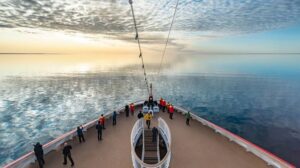
Two days – back through the Drake Passage
Reflect on your adventure…
Our ship begins to head back north after our time in Antarctica. As we make the return trip across the Drake Passage to Ushuaia, you’ll have plenty of opportunities to enjoy this time at sea. Join the Expedition Team in the Science Centre to delve into areas of interest and contribute your observations to Citizen Science projects. Enlist the help of the Expedition Team to help identify species captured in your photos.
Relax with a treatment in the spa and wellness area or take in the fresh sea air from the on-deck hot tubs. Spend time in the Explorer Lounge & Bar with the new friends you’ve made on your trip, sharing experiences over a relaxing drink.

Crossing the Drake is a Rite of Passage…
When people return from Antarctica, they tell the story of their Drake Passage crossing, almost the same way some mothers describe childbirth or distance runners tell of their first big race. Beyond the bragging rights, those who have crossed the Drake know they have
completed something difficult and special—a feat that results in lifelong dividends.
In crossing the Drake passage, you will have journeyed across one of the planet’s roughest sections of ocean, followed by
the awesome reward of experiences in Antarctica.
Not everyone has the mettle to pay that price. Few travellers visit Antarctica—only about 40,000 each year.
That’s an exclusive club, and the Drake is the main mental obstacle to greater visitation.
Crossing the Drake is a self-selecting filter - if it were easy, everyone would do it.
Overnight: Aboard MS Roald Amundsen

Morning – arrive Ushuaia…continue to Buenos Aires
Enjoy an expedition finale in Buenos Aires…
Your expedition cruise ends back where we set out from in Ushuaia, the main city in Tierra del Fuego. From here, you’ll travel on a charter flight back to Buenos Aires.
Charter Flight
Ushuaia to Buenos Aires
Duration: 3hrs 40mins