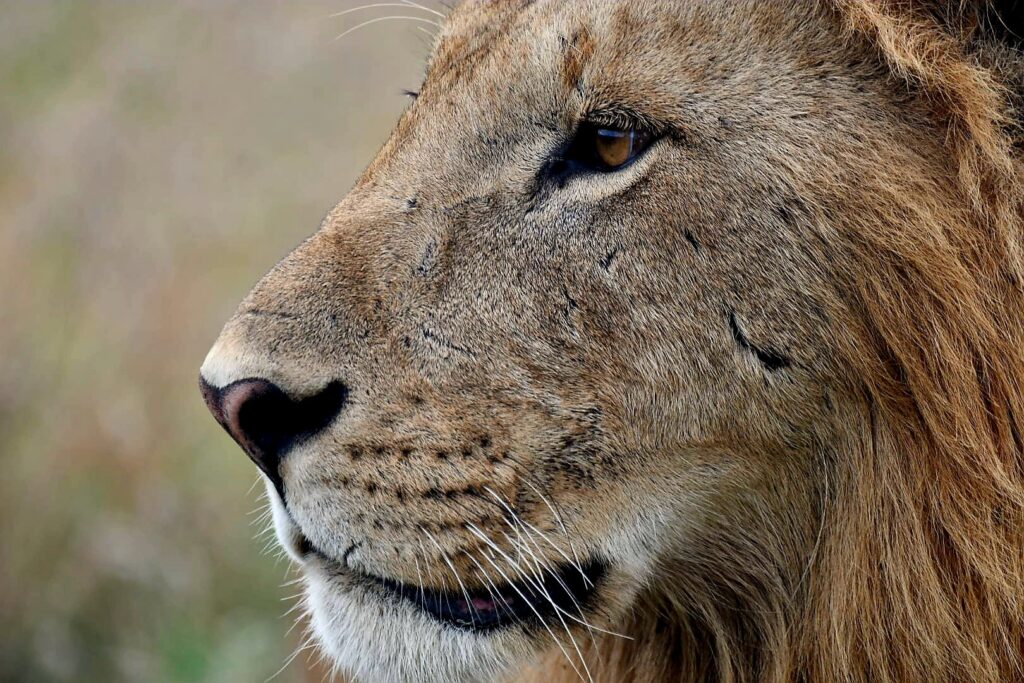
For a country of its size, Kenya sure packs a lot in: mountains and deserts, colourful tribal culture, beaches and coral reefs, and some of Africa’s best wildlife attractions. In fact, to say Kenya is Africa in microcosm would not be stretching the point. There are a million different reasons to come here, and picking just one is nigh impossible. Stunning landscapes set the scene, from Kakamega’s rainforests to Indian Ocean beaches by way of Mt Kenya National Park; the rolling grasslands of the Maasai Mara to searing deserts on the shores of the Jade Sea; with The Rift Valley, home to Hell’s Gate National Park, cleaving a massive gash through it all.
Wildlife safaris have been the mainstay of Kenya’s tourism for decades, and several Kenyan parks, like Tsavo National Park, are among the best places in Africa to see lions, elephants, leopards and the famous wildebeest migration. Kenya rates as one of the top five bird-watching destinations in the world; other activities for outdoor enthusiasts include trekking the glacial ridges of Mt Kenya, ballooning over the Maasai Mara, snorkelling at the Marine National Park in Malindi on the Indian Ocean coast, and much more besides. Kenya’s biggest city, Nairobi, is sidestepped by many visitors, but, in fairness, has an interesting urban appeal with its cafes and nightlife.
The people, too, represent a wide cross-section of everything that is contemporary Africa, and everyday life brings together traditional tribes and urban families; ancient customs and modern sensibilities. Swapping the latest political gossip with the switched-on locals is just one more small pleasure that comes with the culture.

The Ol Pejeta Conservancy is a 90,000-acre (360 km2) not-for-profit wildlife conservancy in Central Kenya's Laikipia County. It is situated on the equator west of Nanyuki, between the foothills of the Aberdares and Mount Kenya. The Ol Pejeta Conservancy works to conserve wildlife, provide a sanctuary for great apes and generate income through wildlife tourism and enterprises for re-investment in conservation and community development.
The Conservancy boasts the largest black rhino sanctuary in East Africa, and in 2013 reached a population milestone of 100 black rhino. It also houses the two remaining northern white rhino in the world, who were moved here from Dvůr Králové Zoo in the Czech Republic. The Sweetwaters Chimpanzee Sanctuary is situated here, and provides a haven for orphaned, abandoned and rescued chimpanzees. It is the only place in Kenya where these great apes can be seen. The Conservancy is host to the "Big five game" among a large selection of other African animals. It also operates a successful livestock program, which serves to benefit local pastoralists and wildlife. Through the conservancy's community development program, Ol Pejeta provides funding to surrounding communities to aid health, education, water and infrastructure projects. They also support the provision of agriculture and livestock services and development of community-based conservation tourism ventures.

For a small park, Lake Nakuru really is breathtaking, with the Rift Valley escarpment, dotted with euphorbia trees, rising up from the lakeshore. Heavy mist sometimes shrouds the lake and yellow fever trees, which seem to glow in the early morning. The view from the Out of Africa Lookout is as close as you can get to the famous plane journey scene from the film ‘Out of Africa’.
Many big safari animals are present in Lake Nakuru National Park, except for elephants. The park is known for its populations of black and white rhino. White rhino is particularly easy to see, and different groups can be encountered throughout the day, especially around the causeway at the western end of the lake. Lake Nakuru is also an important refuge for the Rothschild’s giraffe, which inhabits the acacia forests extending out from the western end of the lake.
In addition to rhino, Rothschild's giraffe was introduced here in the 1980s and has now become locally common. Vervet monkey and olive baboon are very common, but the beautiful black-and-white colobus monkey is rarer than it used to be. Tree-climbing lions are possible highlights. The acacia forest behind Mikingo Hill is a good place to look for leopards. Hippo, waterbuck, plains zebra, eland, buffalo and Thomson’s gazelle are common on the floodplains.
Lake Nakuru can be visited throughout the year, but wildlife viewing is best during the Dry season (June to February). It can be more difficult in April and May, which are usually the wettest months. At this time, rain might interfere with your game drives, and the grass tends to be very high, making animal spotting more difficult.

The Maasai Mara is Kenya's greatest wildlife reserve, a large extension of open plain grasslands, woodlands and smooth hills rich in some of Africa's most thrilling wildlife. Occupying an area of 320 km² in south-western Kenya, within the Great Serengeti ecosystem, it's effectively the northern continuation of the Serengeti National Park and game reserve in Tanzania.
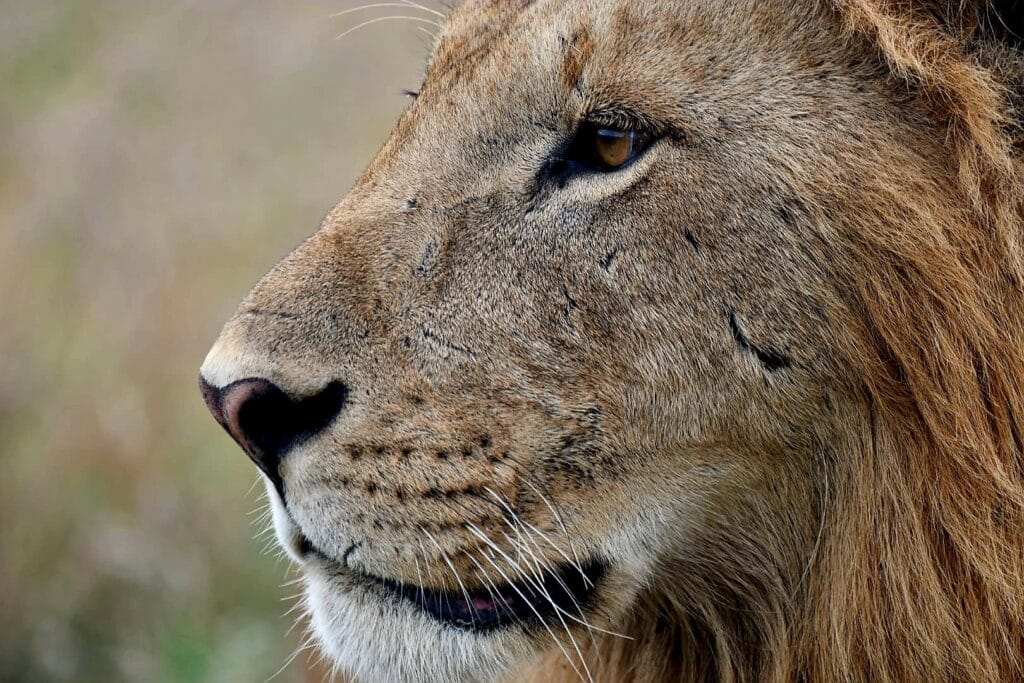
The Maasai Mara's quantity and variety of wildlife is breathtaking. The reserve is perhaps most famous for its lions, which are found in large numbers, and for the annual wildebeest migration, known as the Great Migration, largely considered one of World's most exceptional natural phenomena. Many other distinctive African wildlife are to be found in the Mara, from elephants, antelopes and giraffes to leopards and hyenas. Hippopotami and crocodiles are found in large groups all along the Mara and Talek Rivers. There is a reasonable population of the endangered black rhinoceros (in 2000 37 individuals were recorded) and of Cheetah, although their numbers are also threatened, chiefly due to tourist disruption of their day-time hunting.
Named for the Maasai people (the traditional inhabitants of the area) and the Mara River which divides it, the reserve is basically a mammal park, and although more than 450 bird species inhabit the area, birdwatchers could remain disappointed, as it’s much harder to spot one given bird species that, say, an elephant or, obviously, wildebeest.
And its the large antelope of the acacia savanna and short-grass plains, known also as gnu, the most numerous inhabitants of the Maasai Mara, with an estimated population of almost 2 million individuals living in the Great Serengeti ecosystem. Around July of each year, these social grazers migrate in a vast ensemble north from the Serengeti plains in search of fresh pasture and return to the south around October. This circular, clockwise migratory route, the Great Wildebeest Migration, is one of the world's greatest natural events. Each year the promise of rain and fresh grass brings more than 1.3 million Wildebeest into a single massive herd, which makes an entrance on the southern plains of the Mara in a massive, surging column of wildlife.Numerous other antelope can be found, including Thomson's and Grant's gazelle, impala, topi and Coke's hartebeest. Large herds of zebra are found through the reserve. The plains are also home to the distinctive Maasai giraffe as well as the common giraffe. The Maasai Mara is a major research centre for the spotted hyena. Additionally, over 450 species of birdlife have been identified in the park.
The Mara river, the reserve's backbone, traverses north to south heading for its westbound way unto Lake Victoria, through the Tanzanian park. Its riverbanks (as well as those of the Mara's multiple tributary streams) are bordered by dense riverine forests where many the reserve's bird species are to be found. It's here, on the banks of the Mara River, where the migratory herds of the Great Migration make their mass crossing, that one of the most dramatic spectacles of nature is consumed. Live and death meet as the wildebeest, terrorized by the crocodile infested waters and churning currents yet obliged by their instinct, attempt to cross the river into the rich grasslands of the northern Maasai Mara.
The entire area of the park is nestled within the enormous Great Rift Valley that extends from the Mediterranean Sea to South Africa. The terrain of the reserve is primarily open grassland, with clusters of the distinctive acacia tree in the south-east region. The western border is the Esoit Oloololo Escarpment of the Rift Valley, and wildlife tends to be most concentrated here, as the swampy ground means that access to water is always good and tourist disruption is minimal. The easternmost border is 224 km from Nairobi, and hence it is the eastern regions which are most visited by tourists.

Around July, the rainy season comes to an end and the Mara is carpeted in tall, rippling swathes of seeding grass. To the south, the oceans of Serengeti fodder have been denuded by over a million wildebeest that have been milling around, rutting, mating and feeding since late March and April. They are not alone. Over 200,000 zebra are part of the procession. Slowly but steadily, this tide of herbivores moves north.
It could be in the last week of July – perhaps sooner or later depending on rainfall – but eventually over half a million of these wildebeest and zebra cross the invisible border that demarcates Kenya from Tanzania, and the Mara from the Serengeti. Like any invasion, there are always frontrunners. Bands of wildebeest canter in loose columns, wide-eyed and alert to the dangers of awaiting predators. Beyond them, the rising clouds of dust betray the vast herds. Migratory wildebeest may enter through the eastern Mara but the herds that marched north through the Serengeti’s Western Corridor are programmed to overcome one last hurdle: to reach the pastures that will sustain them through the dry season, they must cross the Mara River.
No matter how high the river is, or how rapidly it is flowing, the wildebeest are not deterred. To cross, they must withstand the crash-landing of leaping off the embankment, avoid the jaws of crocodiles and lions that wait in ambush, paddle and thrash their way across the river, and finally they must hope that they do not get simply crushed in the commotion. A good many have their journey tragically ended at the crossing points, and in some years, piles of bloated carcasses accumulate to provide an ongoing banquet for crocodiles and vultures.
The Great Migration is a clockwise, round-trip journey of around 600km during which an estimated 250,000 wildebeest perish each year. Exhaustion, hunger, injury and predation are the main factors, with newborns within their first year and those older than fifteen being the most vulnerable.
As the star of the show, with its shoebox snout, spindly legs and tousled beard, the wildebeest looks a little less than elegant, and appears to have been put together by a committee. In addition to its ungainly appearance, it seems – even at the best of times – to be a somewhat confused and bewildered creature. But like everything else, it is built for a purpose, and that is to consume vast quantities of grass and have enough stamina to cover
great distances. Often simply called a gnu (which is a fairly good description of its singular vocal ability), in both of these roles, the wildebeest excels.
Upon arrival into Nairobi Kenyatta International Airport, guests will be met by our safari guides in the arrival lounge, after customs and passport control, and escorted by safari vehicles to the Serena Hotel.
Check-in, freshen-up, time to relax prior to meeting for pre-dinner drinks followed by leisurely dinner in H&S Restaurant….early to bed!
Overnight: The Serena Hotel, Nairobi

Enjoy an early Buffet Breakfast this morning.
Check-out after breakfast and travel north by safari vehicle to Ol Pejeta Conservancy, a brief stop will be made at the Equator.
Upon entering the sanctuary, we arrive at Sweetwaters Tented Camp in time for lunch.
Unpack and enjoy a sumptuous buffet lunch with the early afternoon at your leisure…meet mid-afternoon for some afternoon tea, coffee and biscuits before embarking on your first afternoon game drive.

Returning to the camp at dusk, dinner in the main restaurant.
Overnight: Sweetwaters Tented camp, Ol Pejeta Conservancy

An early morning wake-up call with tea, coffee and biscuits before meeting your guide for an early morning game viewing drive.
On completion of your game viewing drive, enjoy a leisurely Bush Breakfast before returning to camp. The remainder of the morning at leisure…lunch at the camp and an afternoon siesta before we meet again for an afternoon game viewing drive in Ol Pejeta Conservancy.

We share 98.6% of our genetic DNA with chimpanzees - but our wild cousins are in trouble. Ol Pejeta has been advocating for the plight of chimpanzees and other great apes since 1993 – when we first opened the Sweetwaters Chimpanzee Sanctuary. The Sanctuary aims to provide a refuge for chimpanzees rescued from the black market and is the only place in Kenya where these fascinating animals can be seen.
During our afternoon game viewing drive, we visit the Chimpanzee Sanctuary.
The chimpanzees’ natural home range spans from Senegal on the West African coast, through the central forested belt of Africa, to Uganda. They are not native to Kenya, but when a rescue centre in Burundi had to be closed due to the civil war outbreak in 1993 – Ol Pejeta opened its doors.
Ol Pejeta has been advocating for the plight of chimpanzees and other great apes since 1993 – when we first opened the Sweetwaters Chimpanzee Sanctuary. The Sanctuary aims to provide a refuge for chimpanzees rescued from the black market and is the only place in Kenya where these animals can be seen.
Returning to the camp at dusk, dinner in the main restaurant.
Overnight: Sweetwaters Tented camp, Ol Pejeta Conservancy

After breakfasting this morning, check-out and meet your guides and travel south along the Great Rift Valley to Lake Nakuru.
The Great Rift Valley is a geological feature due to the movement of tectonic plates and mantle plumes that runs south from Jordan in southwest Asia, through East Africa and down to Mozambique in southern Africa. In all the Rift Valley is 4000 miles (6,400 km) long and is 35 miles (64 km) wide on average. It is 30 million years old and exhibits extensive volcanism, having produced Mount Kilimanjaro and Mount Kenya.
The Great Rift Valley is a series of connected rift valleys. Seafloor spreading at the north end of the system created the Red Sea, separating the Arabian Peninsula on the Arabian Plate from the African continent on the Nubian African Plate and eventually connect the Red Sea and the Mediterranean Sea.
The rifts on the African continent are in two branches and are slowly splitting the horn of Africa from the continent. It is thought that the rifting on the continent is driven by mantle plumes from deep in the earth, thinning crust so it may eventually form a new mid-ocean ridge as eastern Africa is split from the continent. The thinning of the crust has allowed the formation of volcanoes, hot springs, and deep lakes along the rift valleys.
Arrive at your lodge in time for lunch.

After lunch enjoy a siesta or an afternoon beverage before meeting in the mid-afternoon for your game viewing drive in Lake Nakuru National Park.
Lake Nakuru National Park encompasses an area of 73 square miles (188 sq km). It is a UNESCO World Heritage Site celebrating flamingos and abundant wildlife. Nakuru is an alkaline lake, which is what further draws birds and wildlife to its shores. The national park and lake are most renowned for the tens of thousands of flamingos which can reach over a million at their peak. The best place to view the view flamingos is from Baboon Cliff.
The serene landscapes of the area include grasslands, marsh, outcrops, rocky cliffs, and sedge. Yellow-barked acacia trees add to the traditional African wilderness experience. Wildlife is bountiful with a populous predator presence to reflect the abundance of prey.
Birdwatchers can hope to see African fish eagle, Verreaux’s eagle, Goliath heron, kingfisher, and of course an abundance of flamingos. It is a spectacular place for birdwatching with over 400 species. There are over a dozen different predator bird species. The flamingo population has earned the lake and national park the slogan, “the greatest bird spectacle on earth.”
Returning to the lodge around sunset, time to freshen-up prior to dinner at the lodge.
Overnight: Lake Nakuru Sopa Lodge, Lake Nakuru

An early morning wake-up call with tea, coffee and biscuits before meeting your guide for an early morning game viewing drive. Returning to the lodge, enjoy your buffet breakfast with the late morning, lunch and the early afternoon at your leisure.
As the sun begins to set, enjoy beverages and overlooking the lake.
Everything on safari is larger than life: the sprawling landscapes, the magnificent big cats, the enormous elephants, and giraffes… and yes, even its celebrated Happy Hour – known as The Sundowner.
Imagine, you’ve spent a day rumbling over savannahs, through the bush, over the hills, and deep in the forest, witnessing every form of wildlife in their natural setting. You’ve marvelled, you’ve photographed, and you’ve seen more big game than you’ve thought possible. Now, the softening light of late afternoon is settling about and it’s time to catch your breath.
Pull up to the shade of an acacia tree, overlooking a great plain, a deep scenic valley, or perhaps by a river or lake. Pull out a small kit, a veritable bar with glasses, libations, and all sorts of yummy snacks. Your guide takes orders for your drinks. Would you care for a gin and tonic, some wine, beer, or a non-alcoholic beverage?
As you look above, the sky paints itself with streaks of pink, gold, and a spreading canopy of orange twilight as the sun magnifies and glows on the horizon. The hors’d oeuvres are passed around and as you take in this lovely setting, sip your drink and soak up the ambiance of the fading day.
This is what the sundowner is all about, a gentle transition into the evening, a moment to reflect on the beauty of Africa.

Returning to the camp after sunset, freshen-up prior to dinner with the remainder of the evening at your leisure.
Overnight: Lake Nakuru Sopa Lodge, Lake Nakuru

Enjoy an early Buffet Breakfast this morning.
After breakfast, check-out and continue your travels south along the Great Rift Valley to the World-Famous Maasai Mara National Game Reserve, a mecca of wildlife viewing awaits…July-September are the months of the migration of wildebeest and zebra.
July is the month when the great herds of wildebeest migration usually arrive on the plains of the Masai Mara, between middle and end of the month. Tens of thousands of wildebeests take the plunge and cross the Mara River in dramatic fashion running the gauntlet of hungry crocodiles, strong river currents, steep banks and predators waiting to ambush. Once on the other side, then they spread out, covering the plains.
With the abundance of animals around, the cheetah return, taking young wildebeests as prey. There is also the possibility of some leopard sightings in the woodlands.
The Marsh Pride of lions remain at the heart of their territory, the Musiara marsh. With so much potential prey around, they do not have to move very far and so the pride spends a lot of time together and regularly hunt wildebeests. Vultures do well cleaning up what the lions and scavengers leave behind.
Arriving at Mara Serena Safari Lodge, some time to freshen-up and meet again for a late lunch!
If you have the energy…enjoy a late afternoon game viewing drive in the Maasai Mara Game Reserve.

Returning to the lodge at sunset, freshen up prior to meeting in the dining area for dinner…discuss your animal sightings over a meal and glass of wine after dinner.
Overnight: Mara Serena Safari Lodge, Maasai Mara National Game Reserve

Spend the next two days exploring the Masai Mara.
During your stay, a full-day safari into the Maasai Mara National Game Reserve…pack plenty of sunscreen and memory sticks for your camera as today will be a day you will never forget…we enjoy an exclusive picnic lunch on the savannah.
A Maasai warrior is a fine sight. Those young men have, to the utmost extent, that particular form of intelligence which we call chic; daring and wildly fantastical as they seem, they are still unswervingly true to their own nature, and to an imminent ideal. Their style is not an assumed manner, nor an imitation of a foreign perfection; it has grown from the inside, and is an expression of the race and its history, and their weapons and finery are as much a part of their being as are a stag’s antlers.
– Karen Blixen –

Visiting a Maasai village offers a fascinating glimpse into the traditional lifestyle and culture of this renowned African tribe. Expect to witness vibrant ceremonies, learn about their customs, and see their livestock in traditional corrals. You can also participate in dances, like the adumu, and purchase handcrafted beaded jewellery, a significant part of Maasai culture.
A picnic lunch in the Masai Mara savannah offers a unique and memorable safari experience. It allows guests to enjoy a meal amidst the stunning natural beauty of the Mara, surrounded by wildlife and the sounds of nature. This activity is typically offered as part of a full-day game drive, providing a break from the camp without interrupting the safari experience.
Dinner on each evening will be at the camp.
Overnight: Mara Serena Safari Lodge, Maasai Mara National Game Reserve

Return to the lodge after this morning’s game drive for breakfast…siesta and return to the plains for some further game viewing in the late afternoon.

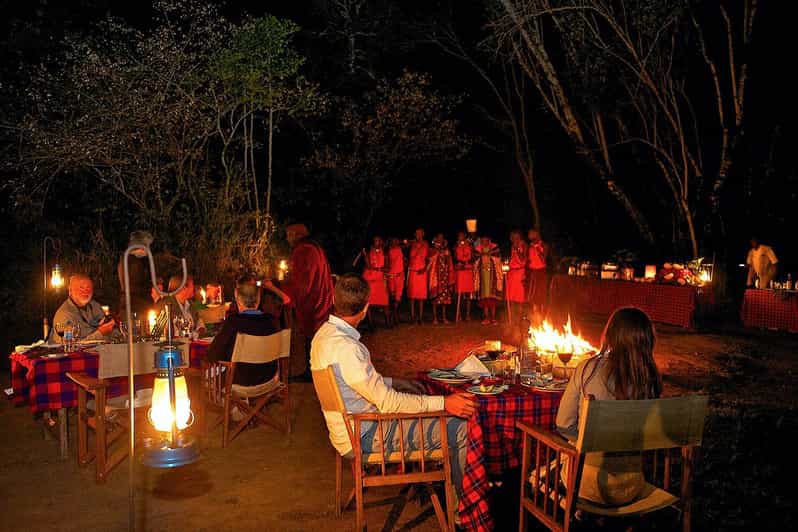
This evening is a special event…a Masai Bush Dinner is a great way to end your safari in Kenya.
As the evening unfolds, where the air is alive with thrills and the scent of savoury delights, immerse yourself in the rhythmic melodies of traditional Masai songs and dances, performed by local artisans whose movements echo the pulse of the earth.
Meanwhile, our skilled chefs work their culinary magic, grilling succulent meats and fresh vegetables on an open space, infusing each dish with the smoky flavours of the savannah. From tender cuts of prime beef to delicate skewers of seafood, every bite is a revelation, a symphony of taste and texture that tantalises the senses.
As you dine beneath the star-studded sky, surrounded by the primal beauty of the jungle, you find yourself transported to a realm where time stands still and every moment is infused with the magic of the Masai Mara. The Bush Serenade is not just a feast for your taste buds but a tapestry woven with flavours and melodies, where true luxury lies in the simple joys of connection, community, and the boundless beauty of the natural world.
Overnight: Mara Serena Safari Lodge, Maasai Mara National Game Reserve

Check-out after breakfast this morning and travel via road to Nairobi.
Upon arrival into Nairobi, enjoy lunch and some last-minute shopping at Utamaduni. After lunch, continue to your accommodation at Nairobi Airport with time to freshen-up. A day-use room has been made available for your convenience.

Beyond the bustle of Kenya’s most cosmopolitan metropolis, experience a haven of elegance and calm nestled among lush gardens at the edge of Nairobi's Central Park. Our 5-star Nairobi hotel merges business and leisure, art and gastronomy and five-star style and service.
Nairobi Serena Hotel, a 5-star hotel in Nairobi, is a celebration of sophistication and a rich fusion of design influences from Ethiopia, the Maghreb, West Africa and East Africa. The warmth of a friendly smile, a superlative eye for detail and gracious service at our Nairobi hotel envelop you from the moment you arrive. While the Nairobi skyline glitters just beyond your windows and the Central Business District is just a stroll away, you’ll feel worlds removed from urban distractions in this peaceful setting.
We provide distinctive opportunities for you to find your own inspiration as you explore the city in search of new experiences. The manner in which we welcome you, exceed your every expectation during your stay and remember you upon your return is the essence of Nairobi Serena Hotel.

It’s location in a private conservancy with a higher wildlife-to-area ratio than any of Kenya's national parks makes Sweetwaters Serena Camp one of the most exclusive tented safari camps in Kenya.
A sheltered oasis, clustered around a water hole and set in the pristine calm of the private Ol Pejeta Conservancy, Sweetwaters Serena Camp offers a charming blend of under-canvas ambiance and Kenyan safari luxury.
Located on the plains of Mount Kenya, the camp features thirty-nine luxury tents, each with its own private veranda overlooking the water hole. The central Rhino Restaurant is housed in the former manager's house of this once colonial farm and offers both regional and international cuisine. Within the house is the Kashoggi Bar and lounge, which centres on a blazing log fire. The Waterhole Bar, built in the style of a game-viewing hide, overlooks the waterhole and offers unrivalled wildlife-watching.
Host to all the members of the ‘Big Five' (elephant, rhino, lion, buffalo and leopard), the conservancy has a higher wildlife-to-area ratio than any Kenyan national park and is one of only four private game conservancies to have been founded in Kenya. At the forefront of the Kenyan conservancy program, the conservancy boasts the largest black rhino sanctuary in East Africa, hosts the only chimpanzee sanctuary in Kenya, and shelters large numbers of rare and endangered species.

Located on a range of hills that form the western limits of Africa’s Great Rift Valley, Sopa’s 60 room Lake Nakuru Lodge offers spectacular views of Lake Nakuru and its surrounding National Park. The park, known for its wooded and bushy grassland, offers wide ecological diversity with 56 different species of mammals including the black and white rhinos and the rare Rothschild’s giraffes, as well as nearly 450 bird species. Guests can enjoy flamingos and other water birds, as well as a variety of terrestrial birds. During their stay, guests can enjoy game drives, dining in the bush, nature walks, archery and spectacular bird watching.
The lounge, bar and dining room have extensive sheltered outdoor terraces, while the infinity swimming pool overlooks the lake and has a pool bar. The property also offers a boutique gift shop for those who wish to bring home a special memento from their safari.

Discover the Kenya safari of your dreams, a vast, gently rolling landscape of acacia-specked grasslands darkened by migrating wildebeest herds.
Mara Serena Safari Lodge invites you to a world where dramatic sights and experiences are enhanced by gracious service and five-star amenities. As the only safari lodge in the famed Mara Triangle, we offer a setting matched by few other hotels in the world: perched high on a bush-cloaked hill with sweeping views of the savannah and the meandering shoreline of the Mara River.
Our Masai Mara hotel lodge is designed in the style of a traditional Maasai Manyatta while offering every modern comfort. Neatly arranged rows of rooms and suites are positioned to offer uninterrupted river views from private balconies. Equally breathtaking sightlines can be enjoyed from the restaurant and bar and rock-enclosed swimming pool. After a day in the bush, a steam shower and an Oringa Massage at the Maisha Spa & Gym offer an exquisite welcome back to civilization.
Enjoy exhilarating excursions deep into the Masai Mara Game Reserve with activities and adventures as intrepid as you choose to be during your stay. Savour superb chef-prepared cuisine in our onsite restaurant and with unforgettable “Bush Dining” and “Sundowner” experiences. Rediscover how special time can be with game drives, breakfasts by the hippo pool and visits to an authentic Maasai village.
From savannah to spa, experience Africa in all its wild grandeur at Mara Serena Safari Lodge.
Our 74 guest rooms which includes the suite have been inspired by the local Maasai heritage and surrounding natural splendour, welcoming guests to experience the allure of the only lodge located within the famed Mara Triangle. A merger of Africa’s untamed beauty and modern sophistication, our accommodation is arranged with one slightly in front of its neighbour, allowing for sweeping river and savannah views. Adorned in swirling patterns that reflect the colours and shapes of the bush, rooms feature Maasai-inspired design-motifs, King or twin beds, lavish, all-encompassing mosquito-curtaining and marble bathrooms with walk-in showers.