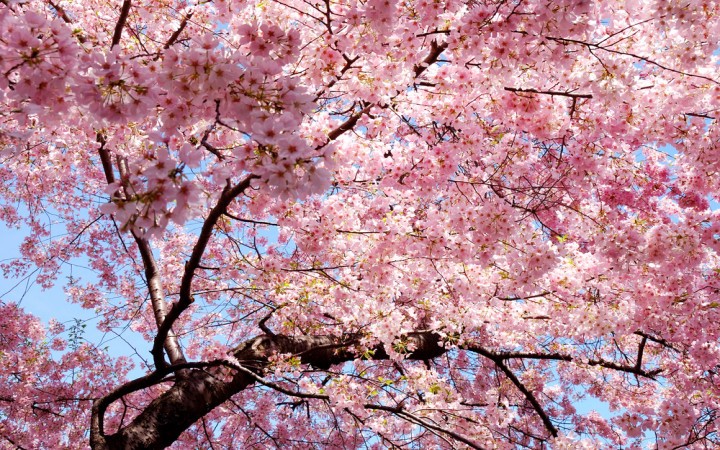
The Sakura of Japan are well known around the world for their radiant, delicate and transient beauty, but they are more than simply beautiful cherry blossom trees. Sakura are tied to Japan’s history, culture and identity. Originally used to divine the year’s harvest, Sakura came to embody wabi-sabi philosophy and Shinto ideals of impermanence, hope and renewal.
Each year, people in Japan gather together to watch the Sakura bloom from March through May and observe how at the peak of their beauty, the blossoms start to fall; providing a stark reminder that although life is beautiful, it is also ephemeral and short.
Sakura History
Cherry blossoms, known in Japan as Sakura, are well known around the world for their radiant, delicate and transient beauty. However they are more than simply beautiful trees, as Sakura have strong ties to Japan’s history, culture and identity. Originally used to divine the year’s harvest, Sakura came to embody wabi-sabi philosophy and Shinto ideals of impermanence, hope and renewal and are now one of Japan’s most iconic natural symbols.
Adding to their magic and mystique, Sakura are usually only in full bloom for around one week. Across the diverse landscape of Japan’s main islands, this magical moment can occur between March to early May. After the brief period of full bloom, the small, delicate flowers start to flutter gracefully from their trees. The blossoms are said to be the most beautiful in this final stage as the white and pink petals gently float to the ground.
For many Japanese, the blooming of the cherry blossom trees symbolises human life, transience and nobleness. The Japanese love to celebrate and cherish the cherry blossoms trees during the limited flowering period and many people hold ‘flower watching’ parties known as Hanami. You simply cannot travel to Japan in spring without appreciating the beauty of the Sakura and experiencing a Hanami party for yourself!
Given the cultural significance of the Sakura, there are countless events, festivals, and speciality tours that centred around the blooming of the cherry blossoms.
Springtime in Japan is a tableau of dreamlike scenes. From the latter half of March to as late as early May, the blossoms of Japan's iconic Sakura (cherry blossoms) captivate visitors and locals alike, as they light up the length and breadth of Japan in subtle shades of pink splendour. Sakura season begins on the island of Kyushu, southwestern Japan, in March, when daily updates begin to track the Sakura front as it progresses northward.
Somei-Yoshino, with their abundance of pale pink blossoms, are the most common trees in Japan; the elegant Shidare-Zakura, weeping cherry trees, often found in parks and along riverbanks, are another must-see site.

Anyone who’s ever eaten sushi, read manga, or sipped sake may feel they know something about this slinky archipelago of some 6800 volcanic islands. And yet, from the moment of arrival in Japan, it’s almost as if you’ve touched down on another planet.
Prepare to be pleasantly disorientated as you negotiate this fascinating land where ancient gods, customs and craftsmanship are mixed with cutting edge, modern technology, futuristic fashions and up-to-the-second style.
High-speed trains whisk you from one end of the country to another with awe-inspiring punctuality. In the suburbs of a sprawling metropolis, you can catch sight of a farmer tending his paddy field, then turn the corner and find yourself next to a neon-festooned (video) games parlour. One day you could be picking through fashions in a boutique designed by an award-winning architect, the next relaxing in an outdoor hot-spring pool, watching cherry blossom or snowflakes fall, depending on the season.
Few other countries have, in the space of a few generations, experienced so much or made such an impact. Industrialized at lightning speed in the late nineteenth century, Japan shed its feudal trappings to become the most powerful and outwardly aggressive country in Asia in a matter of decades. After defeat in World War II, Japan transformed into economic giant, the envy of the world. Having weathered a decade-long recession from the mid-1990s, Japan is now relishing its “soft power” as the world’s pre-eminent purveyor of pop culture, with anime and manga leading the way.
In the cities you’ll first be struck by the mass of people. These hyperactive metropolises are the place to catch the latest trend, the hippest fashions and must-have gadgets before they hit the rest of the world. It’s not all about modernity, however: Tokyo, Kyoto, Ōsaka and Kanazawa also provide the best opportunities to view traditional performance arts, such as kabuki and nō plays, as well as a wealth of Japanese visual arts in major museums. Outside the cities there’s a vast range of travel options, from the UNESCO World Heritage-listed Shiretoko National Park in Hokkaidō to the balmy subtropical islands of Okinawa, and you’ll seldom have to go far to catch sight of a lofty castle, ancient temple or shrine.

Tokyo (東京, Tōkyō) is Japan's capital and the world's most populous metropolis. It is also one of Japan's 47 prefectures, consisting of 23 central city wards and multiple cities, towns and villages west of the city centre. The Izu and Ogasawara Islands are also part of Tokyo.
Prior to 1868, Tokyo was known as Edo. Previously a small castle town, Edo became Japan's political centre in 1603 when Tokugawa Ieyasu established his feudal government there. A few decades later, Edo had grown into one of the world's largest cities. With the Meiji Restoration of 1868, the emperor and capital moved from Kyoto to Edo, which was renamed Tokyo ("Eastern Capital"). Large parts of Tokyo were destroyed in the Great Kanto Earthquake of 1923 and the air raids of 1945.
Today, Tokyo offers a seemingly unlimited choice of shopping, entertainment, culture and dining to its visitors. The city's history can be appreciated in districts such as Asakusa and in many excellent museums, historic temples and gardens. Contrary to common perception, Tokyo also offers a number of attractive green spaces in the city centre and within relatively short train rides at its outskirts.

Kyoto Prefecture (京都府, Kyōto-fu) is part of the Kansai Region, extending to the Sea of Japan coast in the north. The prefectural capital is Kyoto City, which used to serve as the national capital for more than one thousand years, and today offers more historical and traditional attractions than any other Japanese city. A famous attraction of northern Kyoto is Amanohashidate, offering one of Japan's three most scenic views.
Kyoto (京都, Kyōto) served as Japan's capital and the emperor's residence from 794 until 1868. It is one of the country's ten largest cities with 1.5 million inhabitants and a modern face.
Over the centuries, Kyoto was destroyed by many wars and fires, but due to its exceptional historic value, the city was dropped from the list of target cities for the atomic bomb and escaped destruction during World War II. Countless temples, shrines and other historically priceless structures survive in the city today.

Western Honshū’s largest city needs little introduction. Since August 6, 1945, Hiroshima (広島) has become a byword for the devastating effects of the atomic bomb, and for this reason alone millions visit the city every year to pay their respects at the Peace Park and museum. But more than either of these formal monuments, the reconstructed city – bigger, brighter and more vibrant than ever – is an eloquent testimony to the power of life over destruction. Where once there was nothing but ashes as far as the eye could see, there now stands a modern city that still retains an old-world feel with its trundling trams and sunny disposition.
Poised on the coast at the western end of the Inland Sea, Hiroshima is also the jumping-off point for several islands, including Miyajima, home of the beautiful shrine Itsukushima-jinja. The view out to the red torii gate standing in the shallows in front of the shrine is rightly one of Japan’s most celebrated, and although the island is often swamped by day-trippers it’s a delightful place to spend the night.
Many of Hiroshima’s top attractions – the Peace Memorial Park and Museum, the A-bomb Dome and the Hiroshima Museum of Art – are all within walking distance of the Genbaku Dōmu-mae tram stop. Hiroshima-jō, Hiroshima Prefectural Museum of Art and Shukkei-en lie north of the Hondōri Arcade and Shintenchi district, where there is a high concentration of hotels, restaurants and bars. The Hiroshima City Museum of Contemporary Art, the most far-flung point of interest, is best explored on foot from the station or by public transportation

The Korean capital of SEOUL (서울) is an assault on the senses. Even small streets find themselves quite alive with frenzied activity by day and searing neon after sunset, while eardrums are set pounding by clamouring shop assistants and the nighttime thump of a thousand karaoke rooms. Restaurants serving Korea’s delectably spicy national dishes lure you in with their amazing aromas and tastes while doing minimal damage to your figure (or wallet), and for tactile bliss, the hot pools and ice rooms of the ubiquitous jjimjilbang bathhouses have no equal.
With over twenty million souls packed sardine-like into a metropolitan area smaller than Luxembourg, this is one of the most densely populated places on the planet, but for all its nonstop consumption, Seoul is also a place of considerable tradition and history. Joseon-dynasty palaces, displayed like medals in the centre of the city, proclaim its status as a seat of regal power from as far back as 1392; the tiled roofs of wooden hanok houses gently fish-scale their way towards the ash-coloured granite crags of Bukhansan, the world’s most-visited national park; the ancient songs and dances of farmhands and court performers are still clashed out in a whirligig of sound and colour along the street of Insadonggil.
A city with a hyper-efficient transport system, a negligible crime rate, locals eager to please foreign guests and an almost astonishing wealth of locally produced modern art: it’s little wonder that so many visitors come away so impressed.
Participants are required to check-in at their respective International Airport at least 2 hours prior to their flight to Tokyo.
Upon your arrival into Tokyo Haneda Airport, clear Customs and Immigration and collect your luggage from the carousel. Exiting the airport, meet your guide and proceed to your private motorcoach for the transfer to your hotel.
Overnight: Sunshine City Prince Hotel, Tokyo

Buffet breakfast to be served at the hotel.
Meet your guide after breakfast this morning for your guided sightseeing tour of Tokyo. We shall have various opportunities to view the Cherry Blossoms during today.
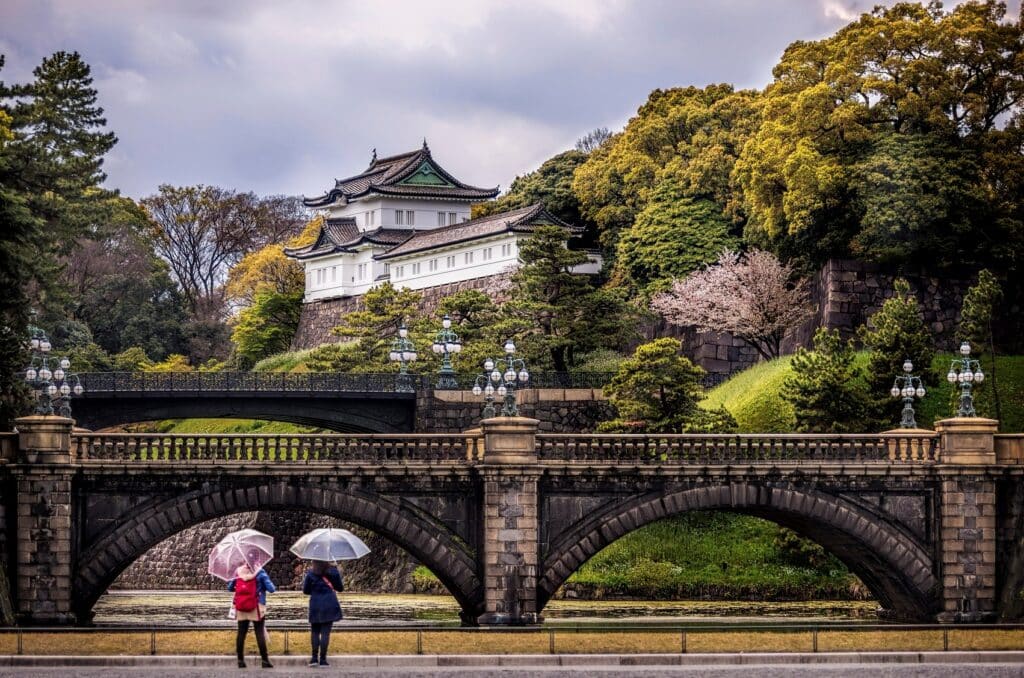
Imperial Palace Plaza - Edo Castle used to be the seat of the Tokugawa shogun who ruled Japan from 1603 until 1867. In 1868, the shogunate was overthrown, and the country's capital and imperial residence were moved from Kyoto to Tokyo. In 1888 construction of a new Imperial Palace was completed. The palace was once destroyed during World War Two, and rebuilt in the same style, afterwards.
Yakasuni Shrine - The origins of Yasukuni Jinja lie in a shrine called Shokonsha, established at Kudan in Tokyo in the second year of the Meiji era (1869) by the will of the Emperor Meiji. In 1879, it was renamed Yasukuni Jinja.
Yasukuni Jinja was established to commemorate and honour the achievements of those who dedicated their precious lives to their country. The name “Yasukuni,” bestowed by the Emperor Meiji, means to preserve peace for the entire nation.
More than 2,466,000 divinities are enshrined at Yasukuni Jinja. These people, regardless of their rank or social standing, are considered to be completely equal and worshipped as venerable divinities of Yasukuni.
We begin our morning with a visit to the Imperial Palace and Chidorigafuchi (cherry blossoms) before continuing on to Yakasuni Shrine.
Stopping for lunch at Tokyo Whisky Library, we continue this afternoon to Teamlab Borderless Azabudai and end the day sightseeing at Shibuya.

Tokyo Whisky Library - Anyone not very familiar with but willing to learn more about whisky best make straight for this Aoyama hideout. Pass the church on the ground floor of the elegant Santa Chiara complex and climb the stairs to find the door to Whisky Library, distinguished by – of course – its bookcases. And as you’d expect, these shelves are filled not with dusty old tomes but with a stunning collection of more than 1,200 different distilled spirits, sourced from all of the world’s major whisky (and whiskey) regions. Aiming to help newbies learn more about the overwhelming variety of fine malts, this bar has none of that ‘connoisseurs only’ attitude sometimes evident at other Tokyo whisky bars and provides a simple menu of options to get your sipping started. The 82 seats include sofas, stools and seating in private rooms, encouraging you to admire your drink from a variety of angles and in different lighting conditions – you’ll feel like you can discover something new even if you order the same tipple twice.
TeamLab Borderless doesn’t have traditional exhibition spaces. Instead, over 50 artworks move around the exhibition spaces interacting with each other and visitors. The artworks cycle through different stages over time — sometimes it takes a full hour for them to complete their cycle, but some are shorter. Because of this, we recommend allowing yourself time to circle back and visit exhibition spaces more than once. Some of the artworks you can see at TeamLab Borderless include:

Microcosmoses – Wobbling Light: jelly-like masses of light shake as they travel through the room.
An Existence Without Centre or Boundary : an artwork that appears to exist materially in the room, but does not actually exist.
Bubble Universe: bubble-like spheres fill the space.
Universe of Fire Particles Dissolving: flames extend in every direction and then dissolve away.
Sketch Ocean: Visitors colour in a fish and then watch it come to life.
We depart early this evening to Gonpachi for our first Japanese dining experience…Yakitori BBQ. This is the restaurant from the famous movie ‘Kill Bill’.
Gonpachi Nishi-Azabu offers carefully selected domestic soba noodles and hand-made soba flour carefully ground in a stone mill every morning, skewers carefully grilled with binchotan charcoal, and freshly fried hot tempura with a unique arrangement of Gonpachi. Gonpachi is world-famous for being the model for the historic ‘izakaya meeting’ between former President George W. Bush and former Prime Minister Koizumi, as well as scenes from film director Quentin Tarantino's ‘Kill Bill.’ As a Japanese restaurant that serves soba noodles, skewers, tempura, etc., it is patronized by customers not only in Japan but also around the world. Enjoy the dynamic interior reminiscent of good old Japan and the ‘Gonpachi Nishi Azabu’ that has fans from Japan and abroad.
Overnight: Sunshine City Prince Hotel, Tokyo

Buffet breakfast to be served at the hotel.
A unique experience this morning…go kart in the streets of Tokyo.
This guided go-karting course will bring you past many of Tokyo's iconic spots, including Akihabara Electric Town, Tokyo Tower, Rainbow Bridge, Ginza, Ueno, Asakusa, and Tokyo Skytree. You'll get to experience a thrilling go-kart ride around the city and take in its sights along the way.
Solo and group riders are both welcome — you can ride alone or with friends and family. Note that whether you're riding solo or with a group, you or your group will be accompanied by an English-speaking guide-driver who will lead the way as you zip through Tokyo in your go-kart.
Before you set off, take the opportunity to don a wacky costume or dress up as your favourite game character. Then, after a short instructional session, hop into your kart, and imagine yourself transported into a colourful video game world as you take to the streets of Tokyo, one of the most vibrant cities in the world!
Upon completion of your go kart experience, stop for tempura lunch at Aoi Marushin.

Aoi-Marushin was founded near Senso-ji Temple's famed Kaminarimon (Thunder Gate) in 1946. Specializing in tempura and tendon (tempura on rice), the restaurant moved to its present location half a block west of the gate in 1965. Known for using lots of batter, this is a great shop for getting your authentic tempura fix.
After lunch, return to the hotel with the remainder of the afternoon and evening at leisure.
Explore Tokyo on your own…travel via the subway to Shinjuku to experience Tokyo at its best…restaurants, bars, shopping and of course, the nightlife.
An area of Tokyo bursting to the seams, armies of office workers, school kids and international travellers squeeze through Shinjuku Station's ticket gates on a daily basis—out into a sprawling area of towering skyscrapers, wide shopping streets and countless cafes, bars and restaurants. Nishi-Shinjuku, west of the station, houses a forest of skyscrapers with the Tokyo Metropolitan Government Building lit up with projection mapping throughout the year. The east side of the station is your access point for shopping, dining and entertainment. Bathed in neon, the area of Kabukicho is a maze of hotels and spots for nighttime revelry. Exit south from the station to find the Shinjuku Expressway Bus Terminal and modern shopping complexes such as NEWoMan Shinjuku.
Overnight: Sunshine City Prince Hotel, Tokyo

Japan Bullet Train
Buffet breakfast to be served at the hotel.
Check-out after breakfast this morning, meet your guide and travel by private chartered motorcoach to Tokyo train station.
Depart: Tokyo @ 09:00 Nozomi # 13
Arrive: Kyoto @ 11:15
Lunch will be a Bento Box with some delicious Japanese food.
Arriving in Kyoto, board you privately chartered motorcoach and begin your sightseeing tour of Kyoto.
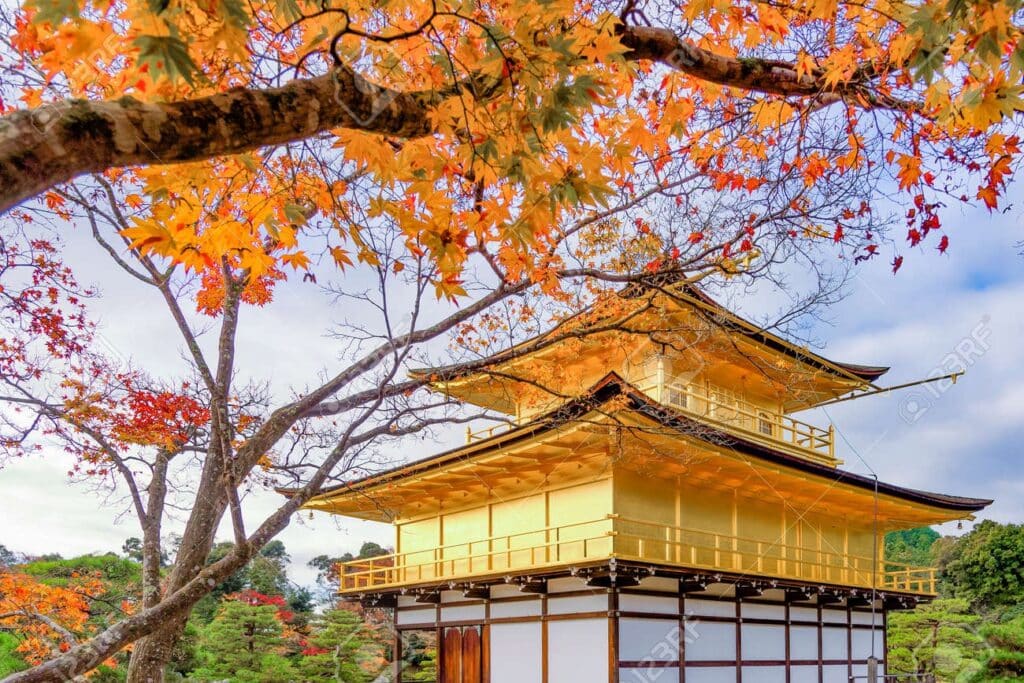
Begin our afternoon by visiting Ninnaji Taizoin Temple followed by a Japanese Tea experience. Our day concludes with a visit to the most famous of Kyoto sites, Kinkakuji Temple.
Ninnaji Temple - Also known as Omuro Gosho, Ninna-ji Temple was built in 888. Within the large compound there stand two important cultural properties—the five-story pagoda and the niomon gate—and a national treasure, the main hall. Many of the temple's assets are displayed in the Reiho-kan Museum, including the sedentary statue of the deity Aizen Myo. It is also famous for its 200 squat cherry blossom trees, collectively known as Omurozakura, that are as short as two meters and bloom last in Kyoto.
Japanese Tea Ceremony - begin at the Temple with a traditional purification ritual, a completely unique and insightful experience for Western visitors. Afterwards, remove your shoes at the entrance of the Grand Tearoom and proceed inside to take your seat. Sample matcha tea at its best. The Tea Master will guide you throughout, showing and explaining every step of the way. Throughout the ceremony you will be taught the fine art of drinking matcha tea and learn about the importance of the ceremony.

Kinkakuji Temple - hidden at the foot of the mountains of Kyoto, this famous Buddhist temple welcomes some of the largest numbers of visitors per year. Get your sunglasses ready, this is one dazzling temple! At the door of the temple, an entry ticket, a slip of Japanese calligraphy, well worth its price, allows you entry to an immersive and poetic experience.
A tree-lined road leads you to the pond, in the middle of which stands Kinkakuji, showing off its golden exterior. Despite its small size, the majesty of the building is undeniable. Perched on this three-storey building is a phoenix, which dazzles the people coming to admire the monument.

Nestled among Kyoto’s eastern hills on the approach to one of the ancient city’s most influential Zen temples lies Nanzenji Yachiyo, a long-established inn that takes as much pride in its haute cuisine as in its traditional hospitality. Although only ten minutes by car from the bustling downtown Gion area, this spot is a quiet area where nothing interrupts the garden scenery, which borrows from the surrounding landscape. The designer, Ogawa Jihei, also created the famous Heian Jingu Shrine garden and Maruyama Park. Nanzenji Yachiyo’s garden, visible from every room in the main building, is one of the many ways it feels like having a private slice of quintessential Kyoto.
The main building, constructed over a century ago, was formerly a villa of Nanzenji Temple and was fashioned in the sukiya-tsukuri architectural style, a way that appealed to traditional aesthetics. Although it retains that character, it has been renovated with modern features and upgrades like fragrant hinoki cypress baths.
The history of Nanzenji Yachiyo’s restaurant dates to 1588, with records of having served food for renowned warlord Toyotomi Hideyoshi’s nearby villa. As the city of Kyoto underwent historical changes, so to do the restaurant change locations and names. It found its present home and opened as an inn following the end of World War II. It upholds culinary traditions by serving classic Kyoto dishes like pike conger eel in summer and “yudofu” simmered tofu, which Nanzenji Temple is well known for.
The elegant restaurant, with its garden views, is also a popular place for shared hot-pot dishes like shabu-shabu, marunabe, and sukiyaki. Every day, the staff prepares a new dashi soup stock that is famously suited to the delicate flavours of the Kyoto-style kaiseki haute cuisine.
Nanzenji Yachiyo is the perfect spot for guests looking for a quaint place to stay with a beautiful garden view and delicious food!
Overnight: Miyako City Kintetsu Kyoto Station

Buffet breakfast to be served at the hotel.
Today is a day of visits to some majestic and cultural monuments, Nijo Temple followed by Heian Shrine and Kiyomizu Temple, all with the opportunity to view Cherry Blossoms!
Nijo Castle - known as the Kyoto residence of the famous leader Tokugawa Ieyasu (the first shogun of the Edo Period), Nijō Castle is a stronghold that represents the prestige and power of the mighty leader known as the unifier of Japan. Construction on the castle was begun in 1601 and finished 25 years later by Ieyasu’s grandson Iemitsu. In 1939, the castle was donated to the city of Kyoto and was officially opened to the public. Enjoy exploring and learning about Ieyasu’s dramatic and interesting life - no one said history had to be boring! With hundreds of varieties of flora as well, Nijō-jō is also a great place to view some of Japan’s treasured seasonal beauty.
Heian Shrine - located in the museum-heavy Okazaki area and built for the city’s 1,100th anniversary, Heian Jingū is a new shrine as far as Kyoto goes. A replica of a famous Heian Period structure, its architecture has a distinctive Chinese influence noticeable throughout. Visitors enter through the grand Ōtenmon Gate into the outer sanctuary, a sprawling open space surrounded by look-out towers with a large ritual hall directly ahead. Heian Shrine’s Shin'en Garden, which consists of four distinct sections, is particularly beautiful and famous for its cherry blossoms in spring and irises in summer. The torii gate leading up to the Heian Shrine is actually one of the largest in the country, towering overhead at a height of about 24 metres. Heian Shrine is host to the grand Festival of Ages in October as well as many others throughout the year.

Kiyomizu Temple - situated in the eastern Higashiyama area, Kiyomizu-dera is one of the most famous and celebrated temples in Kyoto. The temple was founded in 778 AD and contains buildings from the 17th century, including a main hall designated as a National Treasure. The temple’s wooden stage is undoubtedly what the temple is most famous for, offering an outstanding panoramic view of Kyoto rising out of a sea of maples. Drink the sacred water filled with good karma at the Otowa no Taki waterfall, wish for a loving relationship at the Jishu Shrine, venture into the “womb of the bodhisattva” tunnel and admire the numerous examples of beautiful architecture… There are countless ways you can enjoy Kiyomizu-dera.
On completion of our sightseeing, we travel to Kushikura for a Yakitori BBQ lunch.
Kushikura - for refined yakitori in traditional surroundings, Kushikura is a sure bet. Because they can do shio-yaki (salt-grilled) chicken, it’s a good choice gluten-free diners.
Located in a fine traditional machiya building on the north edge of downtown, Kushikura serves some fantastic yakitori (the “kushi” in the name refers to the skewers on which the yakitori is cooked) both as part of filling set meals and a la carte.
There are several nice private rooms for families and groups, as well as a great counter where you can watch the chefs at work.
Later this afternoon, a real treat at the Samurai Kenbu Theatre.
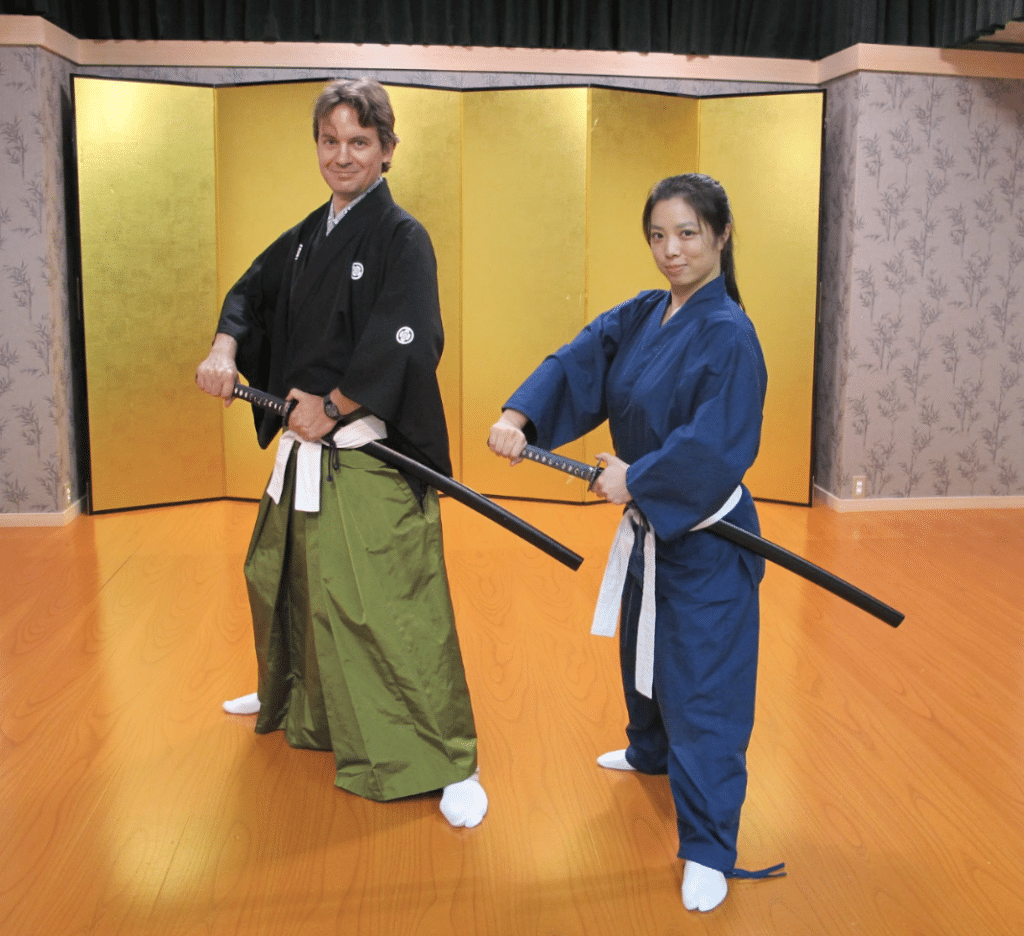
Embark on a fascinating journey through the heart of Japanese martial arts and culture at Samurai Kenbu Theatre, where you experience a unique experience that immerses you in the ancient world of the Samurai. Programs are designed to enlighten and entertain, providing a blend of historical insight and hands-on practice.
Whether you're a curious beginner or a seasoned enthusiast, our range of classes and shows cater to all levels of interest. Learn the art of Kenbu, a traditional performance that combines swordplay with dance and poetry, deeply rooted in the Samurai ethos. Our expert instructors will guide you through the graceful yet powerful movements, allowing you to experience the discipline and artistry of the Samurai spirit.
Don't miss our exciting Samurai Class, where you can don authentic Samurai attire, wield a katana, and delve into the rich history and practices of these legendary warriors. From engaging classes to breathtaking performances, Samurai Kenbu offers an unforgettable experience for all ages.
Discover the spirit, beauty, and strength of the Samurai at Samurai Kenbu Kyoto. Join us for an adventure into the heart of Japanese culture.
Imagine stepping into the shoes of a Samurai and immersing yourself in their culture and practices. At our Kyoto Samurai Kenbu workshop, this experience comes to life! Kenbu, a traditional Japanese stage art, masterfully combines the use of a Katana (the iconic Japanese sword) and a traditional fan, all while embodying the spirit and poetry of the Samurai.
Located in Kyoto, our workshop offers an authentic Samurai experience. Here, at our dojo (training gym), you can don the traditional attire used in Kenbu performances, learn the art of handling a Japanese sword and fan, and embrace the Samurai way in a fun and interactive manner.

After a fun day exploring and experiencing Kyoto, this evening is at your leisure.
Burnt Kogashi Shoyu Ramen, also known simply as Burnt Shoyu Ramen, is characterized by its distinctive smoky aroma achieved by lightly burning soy sauce before combining it with rich broth. Popularized in regions like Kyushu, Japan, this technique enhances ramen flavour complexity.
MENBAKA Kyoto Fire Ramen Restaurant…we started first Menbaka (Fire Ramen) restaurant in 1984. In the early days, our restaurants served different types of ramen. One year after establishment, the founder found out that the green onion would not only emanate good smell but also enhance good taste. Since then, Fire Ramen was created and has become the most popular dish in Menbaka.
Great experience and delicious ramen. At first when they gave us safety gear, I was wondering what I had gotten myself into. It was all safe and thrilling at the same time. The ramen was delicious, would have bought it even without the fire show."
Overnight: Miyako City Kintetsu Kyoto Station

Buffet breakfast to be served at the hotel.
A little after breakfast this morning, travel to your venue for a sushi making experience.
Ready to roll like a sushi pro in Kyoto? Say Konnichiwa to Yone, Hide, and Yutaka, three sushi chefs on a mission to share their love for sushi-making!
Kyoto is known for its unique style of sushi, which emphasizes seasonal and local ingredients. These culinary ninjas start their day hunting for the freshest fish at the Kyoto Central Wholesale Market, guaranteeing top-notch ingredients for your sushi adventure. With over 10 years of sushi mastery, these skilled chefs will lead you through the art of crafting the perfect nigiri and rolls. Don't worry about the language barrier; these craftsmen speak English fluently.
Whether you're a sushi rookie or you already know a thing or two about nigiri, the step-by-step class will have you making top-notch sushi in no time! Join a group class for an in-depth, 90-minute lesson to take your sushi skills to a new level! You'll learn the secrets of traditional Japanese Nigiri Sushi, Gunkan Sushi, and Hosomaki–which is Maki Sushi made with nori on a ‘Makisu’ (bamboo mat). The chefs will explain, in-depth, about making sushi while everyone washes their hands. Then, you'll make 6 Nigiri and 2 types Maki rolls. You'll create a top-notch sushi meal with regular or premium fish (optional) and ingredients! After mastering the art of sushi-making, you'll indulge in your mouthwatering creations.
Whether you're a sushi samurai or a curious foodie, join us for an unforgettable sushi-making experience in Kyoto. You’ll be able to bring home your newfound skills and make sushi long after your trip ends. Your taste buds (and friends) will thank you!
After lunch, board your privately chartered motorcoach and return to your hotel.
After returning to your hotel…or drop-off point of your choosing, the remainder of the afternoon and evening is at your leisure.
Entertainment suggestion…Macho Bar!

Japan is famous for weird and wacky restaurant themes, but this one is sure to carry weight. Macho Cafes or Macho Bars have recently become popular amongst locals and foreigners alike. Experience Magic Mike-esque evening with muscley eye-candy.
Whilst the emphasis of a Macho Bar is indeed on its aesthetics, the food and alcohol are delicious. The menu offers a selection of themed drinks with designated poses, allowing you to sip on delicious cocktails whilst eyeing the firm, flexed muscles of the wait staff.
If you’re not one for alcohol, a variety of nutrient-rich health foods such as wasabi avocado and freshly squeezed fruit juice are available. Don’t worry, the eye-candy service extends to these beverages as well, as they squeeze the juice from the fruit by hand right in front of you.
There is an additional separate menu found in store, full of special ‘performances’ involving lots of flexing, ‘kabe-dons’, and a list of poses offered for free with each dish or drink ordered. These include typical body-building poses such as the double bicep and abdominal flex to show off their rippling abs. If you are lucky, you might just be able to see the infamous ‘pec dance’ and maybe even touch a Macho Man’s firm chest.
For a more flamboyant performance, the ‘Overflowing Muscle Fibers’ option is your best bet, with all the Macho Men ripping off their uniform for you – true Magic Mike style. You’ll also notice that certain taglines are used to enhance the atmosphere, like ‘aishiteru, aishiteru (I love you, I love you) for females, or ‘aniki’ (bossman) for males.
Once the night is over, the Macho men will send you off with an energetic ‘Arigatougozai-macho’ and a handful of photos in your phone commemorating your unique experience. Japan’s themed bars and cafes are one of a kind and I can guarantee that you won’t find a night out like any other in Japan’s Macho Bars.
Overnight: Miyako City Kintetsu Kyoto Station

Buffet breakfast to be served at the hotel.
Check-out after breakfast this morning, meet your guide and travel by private chartered motorcoach to Kyoto train station.
Depart Kyoto @ 09:52 Nozomi # 11
Arrive Hiroshima: 11:33
Lunch will be a Bento Box with some delicious Japanese food.
Arriving into Hiroshima, board your privately chartered motorcoach and travel to Itsukushima Shrine…afterwards, take the Miyajima Ropeway to Miyajima island.
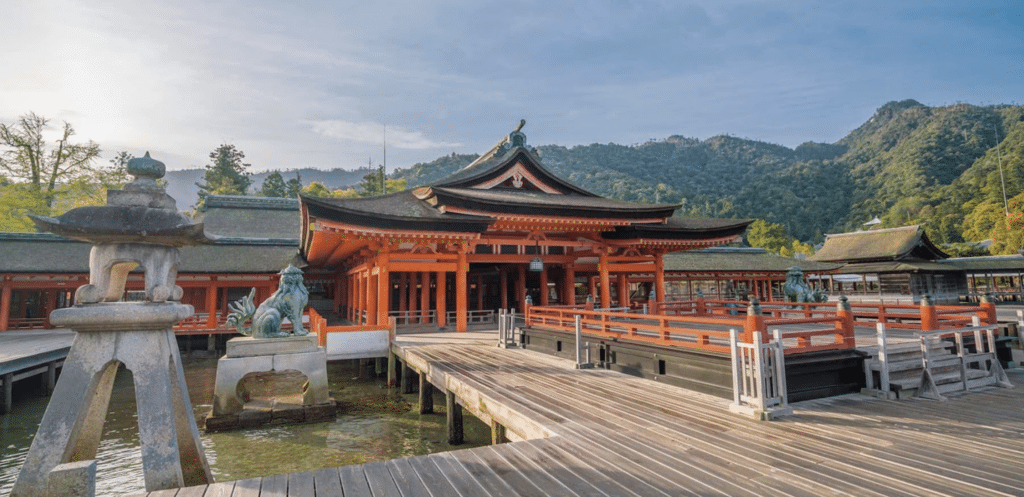
Itsukushima Shrine and Miyajima Island - the centuries-old Itsukushima Shrine (厳島神社, Itsukushima Jinja) on Miyajima is the source of both the island's fame and its name. Formally named Itsukushima, the island is more popularly known as "Miyajima", literally "shrine island" in Japanese, thanks to its star attraction. The shrine is known worldwide for its iconic "floating" torii gate.
The shrine and its torii gate are unique for being built over water, seemingly floating in the sea during high tide. The shrine consists of multiple buildings, including a prayer hall, main hall and noh theatre stage, which are connected by boardwalks and supported by pillars above the sea.
Miyajima Island has a long history as a holy site of Shinto. The island's highest peak, Mount Misen, was worshiped by local people as early as the 6th century. In 1168, Taira no Kiyomori, the most powerful man in Japan during the end of the Heian Period, selected the island as the site of his clan's family shrine and built Itsukushima Shrine.
The shrine is located in a small inlet, while the torii gate is set out in the Seto Inland Sea. Paths lead around the inlet, and visitors enjoy walking along them while looking out onto the sea. After sunset, the shrine and the torii gate are illuminated daily until 23:00, providing a perfect backdrop for ryokan guests to enjoy an evening walk in yukata and geta sandals.
This evening, dinner is at Setouchi Wasabi…below is an example of some of the menu.
Bamboo shoots sprouts. San'in mackerel with vinegar. Etajima oyster confit with olives Ehime sea bream Sanin mackerel salmon Domestic sayori [Simmered] Yellow-flavored shrimp and simmered spring vegetables (bamboo shoots, turnips, shiitake mushrooms, cherry ginseng) [ Strong] Hiroshima Highland Black Beef Steak -Onion Sauce- [Frying] Sakura shrimp kakiage Cod sprouts Kogomi With algae salt from Kamakari Ehime sea bream grilled in Saikyo [Steamed] Clams, shrimp, white fish with seafood tea bowl steamed 〜桜 kake~ [飯物] Ondo Chirimen Kama Rice Sumono Pickles [Sweetness] Fruit anmitsu with white balls….delicious!
Overnight: Rihga Royal Hotel, Hiroshima
Buffet breakfast to be served at the hotel.
Departing the hotel after breakfast, this morning visit is a sombre one…the Peace Memorial Museum.
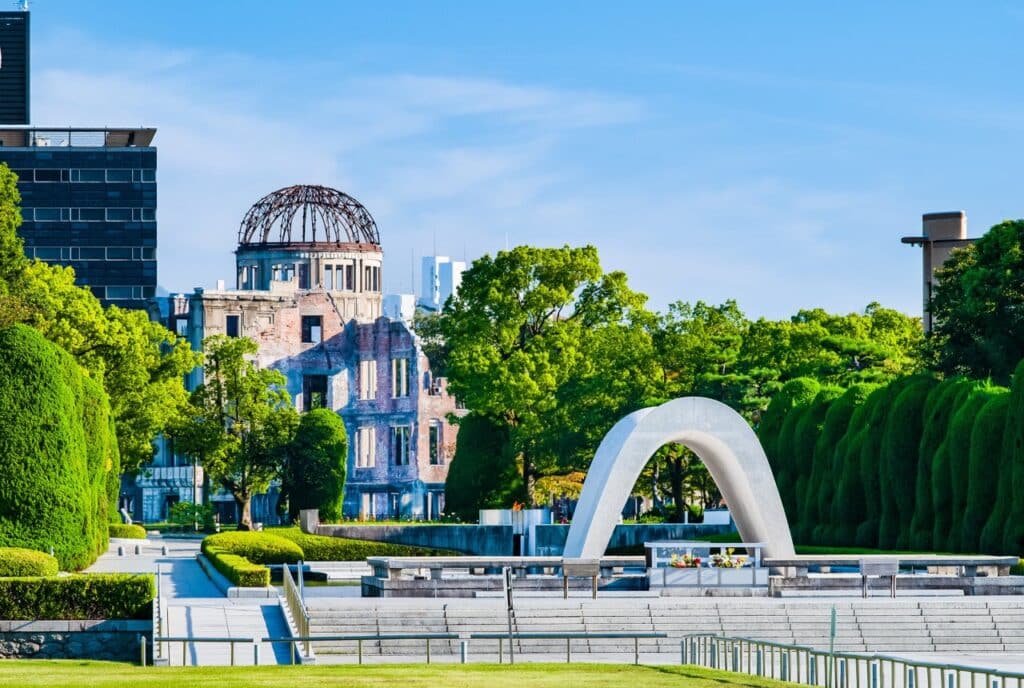
Hiroshima Peace Memorial Park and Museum - Hiroshima's Peace Memorial Park (平和記念公園, Heiwa Kinen Kōen) is one of the most prominent features of the city. Even visitors not looking for it will likely stumble upon the large park of over 120,000 square meters. Its trees, lawns, and walking paths are in stark contrast to the surrounding downtown area.
Before the bomb, the area of what is now the Peace Park was the political and commercial heart of the city. For this reason, it was chosen as the pilot's target. Four years to the day after the bomb was dropped, it was decided that the area would not be redeveloped but instead devoted to peace memorial facilities.
The park's main facility is the Peace Memorial Museum. Consisting of two buildings, the museum surveys the history of Hiroshima and the advent of the nuclear bomb. Its main focus though is on the events of August 6: the dropping of the bomb and its outcome in human suffering. The personal details displayed are quite upsetting and serve to remind that we should not take peace for granted.
The A-Bomb Dome, also known as the Hiroshima Peace Memorial, is what remains of the former Prefectural Industrial Promotion Hall. The building served as a location to promote Hiroshima's industries. When the bomb exploded, it was one of the few buildings to remain standing, and remains so today. A UNESCO World Heritage Site, the A-Bomb Dome is a tangible link to Hiroshima's unique past.
Between the Museum and the A-Bomb Dome is the Cenotaph for the A-Bomb Victims. The Cenotaph is an arched tomb for those who died because of the bomb, either because of the initial blast or exposure to radiation. Below the arch is a stone chest holding a register of these names, of which there are over 220,000.
Every year on the anniversary of the bomb, a ceremony is held at the park. Speeches are made, wreathes are laid at the Cenotaph, and a moment of silence is observed at 8:15 am, the precise moment of detonation.
On completion of the tour, Okonomiyaki lunch at Hiroshimayaki.

After lunch, the remainder of the afternoon and evening is at your leisure.
Sightseeing suggestion…ride on the old time Hiroden vintage trolleys
The remnants of yesteryear exist in Hiroshima in many ways, especially embodied through the old-time Hiroden Vintage Trolley cars that run through the streets. These trolley cars do more than simply looking the part for the vintage aesthetic, with their wooden-frames and lacquer paint. Many of these trolley cars were issued prior to the dropping of the bomb, and many of them still exist today and are still in operation, servicing the city as an iconic form of public transportation.
The presence of these trolley cars at the time of the bombing has led to them being dubbed hibaku densha, meaning atomic bomb cable cars. These trolley cars are an essential piece of Hiroshima history, as well as a practical way to explore what the rest of the city has to offer!
Overnight: Rihga Royal Hotel, Hiroshima
Buffet breakfast to be served at the hotel.
This morning and lunch at your leisure, prior to check-out and transfer to Hiroshima Airport for your flight to Australia
OR

Extend your stay and travel with us to Seoul, South Korea.
South Korea
Your flight this afternoon to Seoul, South Korea via Tokyo. Arrival is in the evening.
Upon your arrival into Seoul Airport, clear Customs and Immigration and collect your luggage from the carousel. Exiting the airport, meet your guide and proceed to your private motorcoach for the transfer to your hotel.
Overnight: Voco Hotel Myeongdong, Seoul

Geunjeongjeon, the main throne hall of Gyeongbokgung Palace in Seoul, South Korea.
Buffet breakfast to be served at the hotel.
Meet your guide after breakfast this morning for your full day guided sightseeing tour of Seoul…visit Gyeongbokgung Palace and view the Changing of the Guard Ceremony. Continue to Bukchon Hanok Village before lunch.
Gyeongbokgung Palace was built in 1395 as the official palace of the Joseon dynasty by Yi Seong-gye, the future King Taejo and founder of the new regime. Gyeongbokgung Palace is commonly referred to as the Northern Palace because of its location to the north.
Gyeongbokgung Palace is arguably the most beautiful and is the largest of all five palaces. Many Joseon kings were crowned here. The premises were once destroyed by fire during the Imjin War (1592-1598). However, all of the palace buildings were later restored under the leadership of Heungseondaewongun during the reign of King Gojong. The assassination of Empress Myeongseong, however, resulted in Gyeongbokgung Palace losing its function as a royal palace, eventually witnessing the downfall of the Joseon dynasty.
Gyeongbokgung Palace retains the original Gyeonghoeru Pavilion, a prime example of Joseon architecture, and the Hyangwonjeong Pavilion and pond. The sculptures in the Geunjeongjeon Hall exemplify Joseon-era sculpture techniques. The west side of the area outside Heungnyemun Gate is occupied by the National Palace Museum of Korea, while the eastern side of Hyangwonjeong Pavilion within the Gyeongbokgung Palace is occupied by the National Folk Museum of Korea.
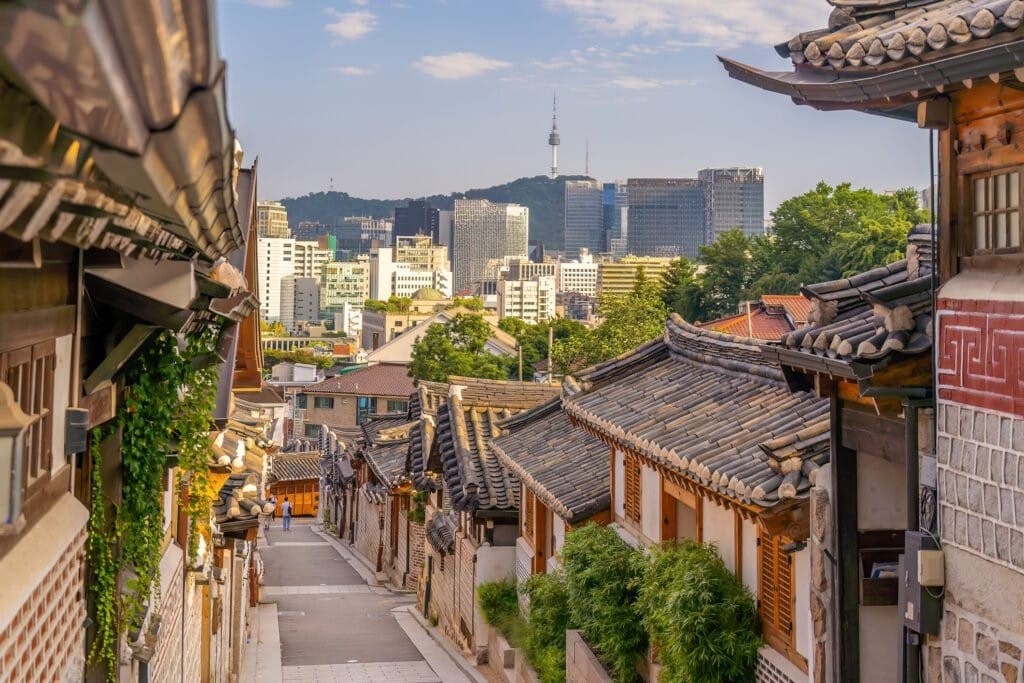
Bukchon Hanok Village is home to hundreds of traditional houses, called hanok, that date back to the Joseon dynasty. The name Bukchon, which literally translates to "northern village," came about as the neighbourhood lies north of two significant Seoul landmarks, Cheonggyecheon Stream and Jongno.
Today, many of these hanoks operate as cultural centres, guesthouses, restaurants and tea houses, providing visitors with an opportunity to experience, learn and immerse themselves in traditional Korean culture.
Following Bukchon Hanok Village, enjoy a traditional Samgyetang (ginseng chicken soup) before continuing your tour to Insadong Antique Street.
Insadong, located in the heart of the city, is an important place where old but precious traditional goods are on display. There is one main road in Insadong with alleys on each side. Within these alleys are galleries, traditional restaurants, teahouses, and cafes. The galleries are the heartbeat of Insadong. There are about 100 galleries in the area offering every example of traditional Korean fine art from paintings to sculptures. The most famous galleries are Hakgojae Gallery, which functions as the centre of folk art, Gana Art Gallery, which promotes many promising artists, and Gana Art Centre.
Return to your hotel later this afternoon with some free time to freshen-up prior to this evening’s activity followed by dinner.
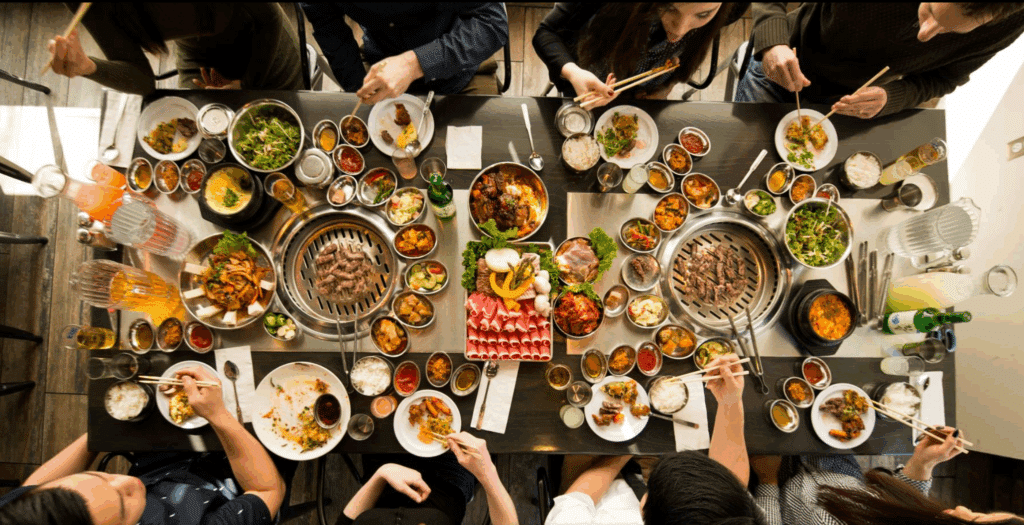
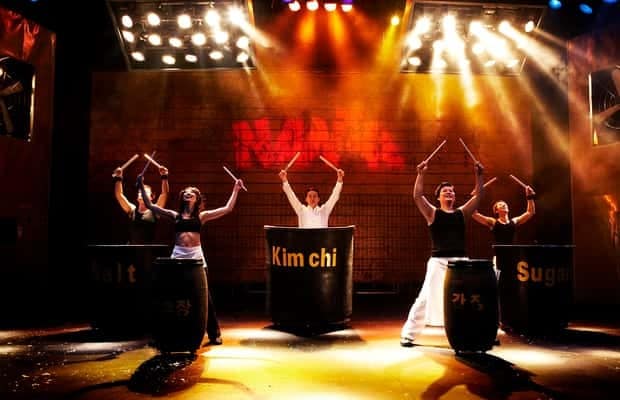
Do something different during your time in Seoul and catch a unique performance at the Myeongdong or Hongdae NANTA Theatre. This non-verbal show is ideal for international visitors and has captivated audiences of all ages and backgrounds.
The story follows three charismatic chefs who are suddenly tasked with preparing ten wedding dishes in just one hour. As the pressure mounts, the kitchen descends into chaos—filled with energetic drumming, acrobatic chopping, and unexpected moments of comedy and drama.
Blending the rhythms of Samulnori with theatrical flair, NANTA offers a performance unlike any other. Since its premiere, it has toured 326 cities in 61 countries, drawn over 15 million audience members, and was even selected as one of Seoul’s Top 10 Cultural Tourism Programs. It holds the record for the most-attended show in Korean theatre history and continues to win hearts around the world.
If you’ve ever walked past a Korean BBQ restaurant and found yourself drawn in by the amazing aroma, you’re not alone. Korean BBQ is more than just a meal…it's an entire experience that has won hearts (and stomachs) across the globe.
Korean BBQ, or “gogi-gui”, translates to “meat roast” and is a staple in Korean cuisine. What makes it so special is how you can grill various types of meat like beef, pork, or chicken– right at your table. It’s a fun way to eat because everyone gets to cook their own meal just the way they like it.
At a typical Korean BBQ, you’ll find a variety of tasty side dishes like kimchi, pickled veggies, and steamed eggs. These sides match perfectly with the grilled meats. But the best part about Korean BBQ is the experience of sharing a grill and spending some quality time with your friends. Marinating meat before grilling is an old Korean cuisine tradition too. Early Korean cooks used to mix various herbs, spices, and sauces to enhance the flavours of the meat. Over time, these techniques got better, resulting in the delicious marinades and grilling methods we know today.
Overnight: Voco Hotel Myeongdong, Seoul

Buffet breakfast to be served at the hotel.
Today is at your leisure to experience some Korean favourites…
K-Pop…
K-pop, short for Korean Pop, is a genre of popular music originating from South Korea. It is characterized by a blend of various musical styles, including pop, hip-hop, R&B, and electronic music, often presented with elaborate music videos, intricate choreography, and an emphasis on visual aesthetics.
Embark on a K-pop odyssey through Seoul! Join us on a curated tour for die-hard K-pop enthusiasts. From iconic broadcasting stations to immersive themed zones, experience the heartbeat of K-pop culture in every corner of the city.
Immerse yourself in a celebration of K-pop, visiting the industry’s most iconic locations and experiencing the magic up close!
Visit one of Korea’s major broadcasting systems and take a short tour of the open radio studio with a guide.
A special landmark at the COEX East Gate depicting the popular dance pose from Psy’s ‘Gangnam Style’.
Starfield Library…one of the most captivating libraries in Seoul which is often featured in many K-dramas.
KTown4U…a paradise for K-pop collectors, offering an extension selection of albums, merchandise and more…
SM Kwangya…flagship store where you can experience the cultural metaverse with your favourite K-pop groups and purchase their unique merchandise.
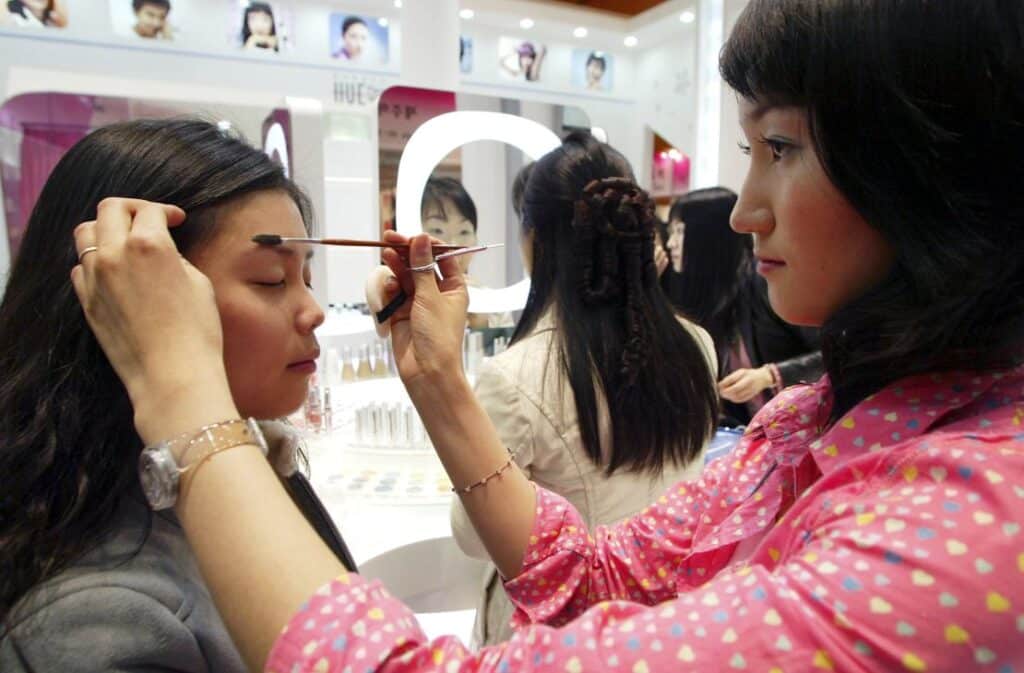
Cosmetics…
In Seoul, several makeup artists and studios offer personal colour analysis to help individuals find makeup and clothing colours that best complement their skin tone. Some popular options include Dustmoth Stography, Cocory Personal Colour, Meime Colour and Beauty, Colour Signal Seoul, and Colour Society in Hongdae. Additionally, ONLEE Colour is a more affordable option, and The Bom in Myeong-dong focuses on self-discovery through colour analysis and makeup.

Squid Game…
An immersive "Squid Game: The Experience" has opened in Seoul, offering fans the chance to participate in games inspired by the Netflix series. The experience includes challenges like Red Light, Green Light, marbles, and tug-of-war, with a final winner selected. There are also photo zones and a retail area for merchandise.
This evening is at your leisure…Myeongdong is a foodie’s paradise with numerous restaurants just a short stroll away from your hotel.
Overnight: Voco Hotel Myeongdong, Seoul

Buffet breakfast to be served at the hotel.
This morning is at your leisure prior to a late check-out and store your luggage at the hotel. Meet mid-afternoon at the hotel reception for your transfer by privately chartered motorcoach to Seoul Airport.
Check-in for your flight to Australia.


Discover a world of comfort and convenience at Miyako City Kintetsu Kyoto Station, a luxurious 4-star hotel located in the heart of Kyoto, Japan.
Built in 2011, this modern hotel offers a seamless blend of contemporary elegance and Japanese hospitality, providing guests with an unforgettable stay. With a convenient check-in time starting from 03:00 PM, guests can easily settle into their stylish and well-appointed rooms, ensuring a smooth start to their Kyoto adventure.
The spacious and tastefully decorated rooms offer a tranquil retreat for weary travellers, featuring modern amenities and plush furnishings that guarantee a restful night’s sleep. For utmost convenience, the check-out time is until 11:00 AM, allowing guests ample time to prepare for their departure and make the most of their stay in Kyoto. Whether you’re embarking on a day of sightseeing or attending business meetings, the hotel’s flexible check-out time ensures a hassle-free experience.
Miyako City Kintetsu Kyoto Station boasts a total of 368 rooms, each designed with meticulous attention to detail to provide a comfortable and relaxing ambiance. From cozy single rooms to spacious suites, there is an accommodation option to suit every traveler’s needs. With a wide range of modern amenities and thoughtful touches, such as complimentary Wi-Fi and a minibar, guests can enjoy a truly luxurious stay.
With its prime location and exceptional service, Miyako City Kintetsu Kyoto Station is the perfect choice for both leisure and business travellers seeking comfort and convenience in the heart of Kyoto.

Rihga Royal Hotel Hiroshima is located in the centre of Hiroshima City, close to key public transportation hubs, and overlooks Miyajima Island, a UNESCO World Heritage Site, as well as the Atomic Bomb Dome in Peace Memorial Park. The hotel has welcomed the Imperial Family and other dignitaries from Japan and abroad, and it has continued to grow with the city of Hiroshima.
With 491 guest rooms that seamlessly blend comfort and quality, not only is Rihga Royal Hotel Hiroshima a hub for business and travel, but it is also a popular local venue for dining, events, and weddings.
Our rooms, designed for your comfort while presenting Hiroshima’s beautiful views, promise an unrivalled sense of tranquillity with luxurious, high-end decor and the best hospitality. Enjoy floor-exclusive services and perks, like in-room check-in and unlimited access to the indoor pool, spa, and sauna.
The hotel offers a wide variety of restaurants, from French cuisine to Japanese cuisine, sushi, teppanyaki, Chinese cuisine, buffet-style dining, as well as a sky dining restaurant and bar.